Episode Transcript
[00:00:00] Speaker A: Foreign.
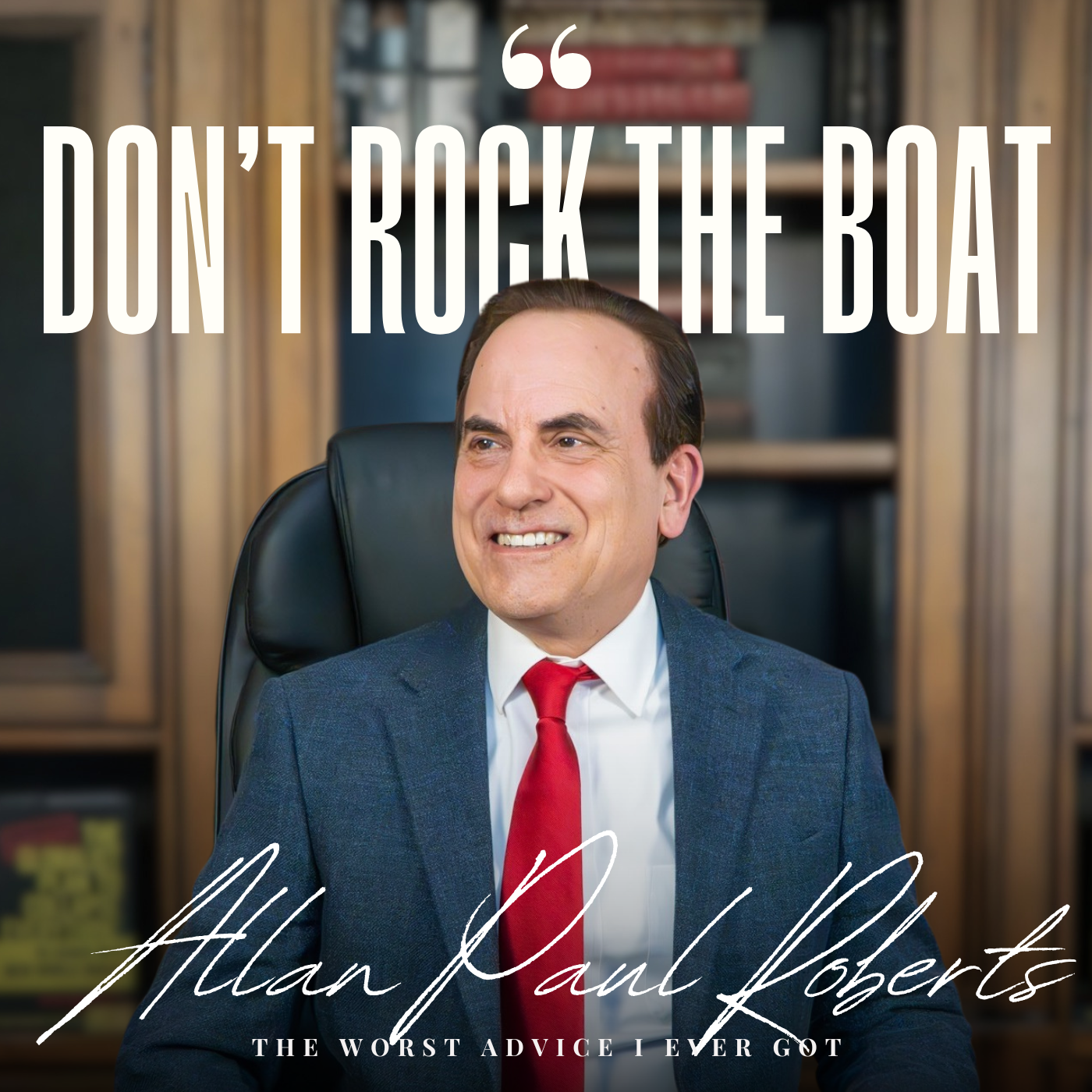
[00:00:05] Speaker B: Welcome to another episode of the Worst Advice I Ever Got brought to you by Smith and Howard. I'm your host Sean Taylor, along with my producer, JB and today our guest is Alan Paul Roberts.
Alan is an author and speaker with a story that spans a pretty wide range of experiences.
He's someone who has lived through a major turning point early in life that shaped how he thinks, shaped how he communicates, and shaped how he approaches the world today.
More recently, he's the author of a book with a bold premise that sparked a lot of conversation. And it's clear he's not someone who's afraid to say what he thinks or take a strong position when he believes in something.
Alan, thanks for joining us today.
[00:00:48] Speaker C: Hey, Sean, great to be here.
[00:00:50] Speaker B: Alan. For.
For your benefit, I'll share with you that we just dive right in with both feet and just get right to the point. So what's the worst advice you ever got?
[00:00:59] Speaker C: Well, I think the worst worst advice I ever got had to be don't rock the boat.
[00:01:04] Speaker A: Don't rock.
[00:01:05] Speaker B: Don't rock the boat. That's. That's one I think we've heard for sure in general, all growing up. You know, we. We hear about that. Was.
Was that something someone actually said to you, or was it more just the. The culture that you heard growing up?
[00:01:21] Speaker C: Yeah, nobody ever, like, really said, hey, son, don't rock the boat. But it was definitely very strong. Like, if things happen in the family, if some weird uncle did something crazy, you just swept it under the rug. You didn't talk about it. And I never realized how weird that was until I met my woman. I married my wife, who came from a family of, like, nine kids. And there was no such thing as don't rock the boat or sweep anything. I mean, you know, they were ruthless in terms of just bringing it all out in the open and discussing it ad nauseam and making fun of you or whatever if you did something strange. So huge adjustment. But, yeah, that was the. Definitely, the culture in my family growing up is do not rock the boat. Sweep it under the rug. Don't embarrass anybody, Move on. You know, you just keep the peace.
[00:02:06] Speaker B: What kind of kid were you, Alan?
[00:02:08] Speaker C: Yeah, so I pretty much. I pretty much lived that. And, you know, as a result, I. I really didn't have enemies.
Not really. You know, I just wanted to make people happy, be a good friend, not be confrontational by nature.
That was definitely me.
[00:02:26] Speaker A: Did that work for you? Like, were you popular? You're having. Making a lot of friends you're doing things like, is it almost seeming like good advice at this point?
[00:02:32] Speaker C: It seemed, it seemed to work. But, you know, it was weird because I think inside there was just something that was kind of restless, like, this doesn't quite fit. When you're not really being your total genuine self, when you can't really say what's on your mind without feeling hindered or like you shouldn't say it.
You know, things kind of build up until you can be yourself.
[00:02:55] Speaker B: So you're starting to feel some of this yourself when you're not able to go deep, kind of not able to, to be maybe completely honest or, or just let it flow naturally. Be real. So, so what changed? I mean, what, what, what happened to where you took this from just maybe a feeling to saying, I, I've got to change something? Was there an event?
[00:03:17] Speaker C: Yeah, there was, there was a big event. When I was, When I was 16, my family and I, we went to Europe for, for five weeks. I saw people who love to be together. I mean, just enjoyed life, joy and energy.
I mean, these people were enjoying each other. And I mean, up to that point in my life, I'm getting high with my friends on the weekend. You're trying to find fun by creating thrills, by forcing it. It's not natural. It's not the natural, you know, enjoyment you have with family and friends that you really love. And, and all I knew was I was done with the drinking. I was done with the drinking when I got back. It's over in my head. That's what I'm thinking. I want, I want this life that I'm seeing, not the life I was had at home and the road I was going down, you know, I don't want that anymore.
[00:04:05] Speaker B: Play it forward for us a little bit. What happens next?
[00:04:08] Speaker C: So, so I come home from my five week trip to Europe, call my friends up, hey, let's get together, run over to my friend's house, and first thing they said is like, hey, Al, when do you want to go get high? That was the first thing out of their mouth, like, they're glad to see me. Lots of smiles and everything. It's, hey, when do you want to go high? Because that was our default thing.
And I'm like, I don't ever want to see that again. And, and I wasn't preaching, I wasn't, I wasn't trying to convert anybody or anything. I just meant I don't want to see it again. You know, I said that that's a wasted life and I'm done. But, you know, so what happened from there were spending the day going to friend's house with the energy that only a 16 year old has. You know, friend. The friend house the house.
And somewhere in that process, unbeknownst to me, someone gave me an extremely high overdose of mescaline, which is an LSD type drug, hallucinogen. And I had never taken any hard drugs. And somebody does this to me. To this day, I still don't know who. I walk into the bedroom and if you can picture like. Like the night sky in the desert, black with like, you know, thousands of stars in it. But instead of looking up and seeing it, I saw it, like on a wall in front of me. It was a wall of black in front of me as I went into the room. And then after a second or two, they spin almost like you'd spin a wheel.
And I, you know, I have no idea what's going on. I scream out, my dad comes running into the bedroom, like, what happened? What's going on? I told him what I just saw. And then his first reaction is, all right, what did you take?
And like, I didn't take anything. What are you talking about? I'm getting pissed off and I don't even know it. But the drugs are working on me, making more emotional, and I'm hallucinating. I'm. I'm just on and off hallucinating. But yeah, I was hallucinating in the next morning when my dad drove me into the hospital from there where. Which it got a lot worse from that point.
[00:06:02] Speaker A: So you're still hallucinating the next morning
[00:06:04] Speaker C: and your dad still hallucinating.
[00:06:06] Speaker B: Really?
[00:06:06] Speaker A: And you still got no idea what's even going on. You're like, I don't know why.
So does your. Your dad must at some, in some level maybe believe you that, like, okay, maybe something is weird, you know, taking you to the hospital.
[00:06:17] Speaker C: Yeah. By the next morning, he wasn't in.
I'm going to get this out of you Mode. No matter what, you know, he was or in, we're going to figure out what just happened. I'm going to get you help Mode.
[00:06:29] Speaker B: So. So talk about what happens at the hospital and really what happens kind of after that point because you're taken into the hospital, what do they tell you? And kind of where does it lead from there?
[00:06:39] Speaker C: So the first hospital I was in, at some point in there, I start getting very frustrated and then eventually a little bit violent because I don't know why I'm there.
I don't Know why they're keeping me there.
I don't understand what's going on. So you got to understand, I'm not thinking clearly, like, oh, I just had an overdose. So logically, these people are trying to help me. Almost like you would be if you were trapped, if someone kidnapped you and had you in a place against your will and you didn't understand why. And they inject me with something to, quote, calm me down.
[00:07:11] Speaker A: Oh, man. More drugs. That's what you need.
[00:07:13] Speaker C: Yeah, Drugs on top of drugs.
[00:07:15] Speaker A: Yeah, right.
[00:07:16] Speaker C: And now at this point, I think I. I think I must have passed out.
I don't know if they got scared. I don't know what happened, if they realized they're in over their head. But they sent me to another hospital, which was basically like a ward for teenage and adolescent drug addicts. So here I am, not knowing where I am, how I got here, not a single person in the world familiar to me, and there's a graveyard outside.
I'm trying to put it together in my messed up head, thinking there was World War 3.
Everyone I know was killed. Somehow I made it and I'm in this hospital. That's what I was actually thinking at that point.
[00:07:49] Speaker B: 28 days later, if you're a fan.
[00:07:51] Speaker A: Yeah, right, Right.
[00:07:53] Speaker C: That. That was where I was, in that hospital. And I was. I was there.
I was in that second hospital for about a week until. Until my parents got me out.
[00:08:03] Speaker B: That's crazy. That's crazy. I'm curious, I mean, about, you know, in that moment. There's soft things going on that clearly you didn't understand, but now you've had time to think back on it. I mean, what is it that you see or understand now that while it was going on, you just didn't understand?
[00:08:23] Speaker C: I was still so shut off from people, my friends. Later, when I recovered, which took nine months was the spring of that year, till I recovered and said, we had a name for you when you were going through this.
And I said, really? What was it? And they said, zombie.
And I said, why zombie? And they said, because people would talk to you. You'd walk down the hall and you couldn't hear them. You wouldn't respond to them. And he's right. I didn't hear him. So I had to get that whole thing, that whole.
That whole philosophy of life, don't rock the boat, care what other people think of you. I had to totally flush that down the toilet because that wasn't working any. Anymore at all, you know?
[00:09:03] Speaker B: So, Alan, how does this whole experience Tie back to don't rock the boat.
[00:09:09] Speaker C: You know, I had to let go of what people thought of me.
That's like not caring about rocking the boat because I don't care about what they think of me anymore because they all betrayed me and I can't really count on them anyway.
And I think, you know, I was going down a path that was a dead end path really in that sense, in terms of building character. You know, I was going down a life of compromise that was, that was my path and I moved off that path to, you know, I'm going to do what I think makes sense and I'm not going to worry about who likes it or doesn't like it.
[00:09:43] Speaker A: Anything outside of like, you know, personal relationships and things that you just started to do differently now that you were like, all right, I don't care what anybody thinks, what am I going to do?
[00:09:54] Speaker C: I, I think I was starting to look for, for truth in a sense, like trying to figure out how things really were.
Wanting to understand the world better and no longer being fooled about the world being a safe place. You know what I mean? Kind of seeing it for what it is more.
And I, I think it led to an eventual, an eventual, eventual journey toward finding Christ in my life. You know, like he says, seek and you'll find. Yep. I think that process of seeking can be, that can be a long, slow journey for a lot of people. And I think it was for me for sure, and that that was a turning point for me. And it was, I think it was in a way, the end of that whole chapter.
So, so yeah, that was a turning point and excuse me from it, really set me up for my life because it was the point that from that point on I was trying to cooperate with what I believe was God's will for me.
Not just because I, I realized, you know, that I needed. That I was a sinner and needed it, but out of a sense of gratitude of what he did back when I was 16.
[00:11:06] Speaker B: I mean, clearly you think back on the event and your, your emotion is, is obvious and audible from it.
I'm, I'm curious.
Does someone have to go through an event like you went through to realize the things that you came to realize?
[00:11:25] Speaker C: Well, I hope it doesn't take that because that was more than anybody should have to go through that I'd ever want anybody to go through. But I, I think what it, it takes is it takes something that causes a 180, something that causes a turning point that you just get fed up with. Where you are and you want the truth. It really comes down to wanting the truth.
[00:11:49] Speaker B: Yeah, yeah.
[00:11:50] Speaker A: It's very fast forwarding to now, like where we are.
[00:11:54] Speaker C: Yeah.
[00:11:54] Speaker A: You, you wrote a book. Obviously the very bold premise is that where this kind of came from is like just living your truth.
[00:12:04] Speaker C: Yeah, well, I mean, I've been from that point in college, I've been trying to, I'll say, cooperate with God in my life. Let's just call it that.
I don't really consider myself a religious person, but I do pray every day. But what? So, so I'm in this habit of, see, seeking God's will is my point. And what happened to me along those lines? In April 2024, in the middle of the night, I Woke up at 4am and all of a sudden like a, like, like a flash, an instant flash.
I was aware of six pillars of society that were in danger of coming down, that were being worked on to try to bring them down.
And the sense was if they come down, the nation's coming down with it.
And I was blown away by that because it was. I. I can't really describe something that doesn't happen in normal life, but, but if you could imagine like walking into a dark room and all of a sudden six TV sets flash on with six different images and you're able to understand what those images mean instantly, all six at one time without being distracted by the other five. That's what this was like. I call it like an instant knowing. Like the lights are on in this energy of knowing what's going on is coming into you. So I'm like blown away by that. I walk into the bathroom, I keep paper and pen in there. I wrote down these six things because I figure it's four in the morning, I'm going to go back to sleep, final write them down, I'm going to forget about it. And within a minute or two, three more different ones, all at the same time, same experience, but with three new ones. Get up and write them down then. Now I'm laying in bed thinking about nine and two more come for a total of 11 now, you know, like three times the charm. This is like, rip off the covers. What is going on? Write them down. And because I'm in this mode of seeking God every day, you kind of get a sense of like when it's God and, and I felt like this was God showing me this for some reason that I didn't understand.
And in my head I'm just saying like, God, what's up? What are you doing? Why are you showing me this? You know, because this isn't religious.
One of them maybe you could say is religious. But, you know, these 11 pillars, you know, why show them to me, show them to some news guy or something who can get the word out there and like, you know, convince a lot of people to pay attention to this. And I'm thinking and thinking, why? You know, why? And then finally it occurs to me, do you want me to write a book? You want me to write a book about these 11 pillars? And if you do, then what's the title? And it was the same experience, like wham, flash. Like the entire title. There was no space between the first word and the last word. It was just right there. The globalists plan to collapse everything to usher in a new world order.
[00:14:45] Speaker B: It almost, if I can, if I can tie some of this together, it almost sounds like the calling you felt to write this book, even as challenging as the subject matter would be and as you know, controversial as it would be, was sort of maybe some answers to your prayers. Like, hey, let me be myself. Let me not be the person who doesn't rock the boat. Let me be honest. It's like, okay, the funny thing is, when people pray for courage, what do they typically put into situations where they have to be courageous? You were praying for something and now, boom, this is thrown in front of you.
I guess you really had to connect that experience you went through towards this whole path of just having to say yes. Because what you just described, that went faster than your recovery from the event in your, in your teenage years.
[00:15:40] Speaker C: Yeah.
[00:15:40] Speaker B: So does this all connect for you? I'm presuming it does.
[00:15:44] Speaker C: It does. It does. Because you know that, that, that event when I was 16 was the foundation for learning how to trust God.
And that that's a lifelong journey for anybody. It's a process. It's not a once and done, but that was the beginning of a journey. And so by the time I'll call it, the request came in to do this, there was only one answer and that's yes. Absolutely. Yes.
[00:16:12] Speaker B: Yeah, yeah.
Reception to the book. And has it helped you like you've written the book?
[00:16:21] Speaker C: Yeah.
[00:16:22] Speaker B: Gotten feedback on the book? You know, I'm sure some support, some non support. Just how has the book helped you in your course to, you know, live the life that you feel, you know, clearly you need to be living?
[00:16:38] Speaker C: Yeah, it's, it's actually helped advance that process because when I first thought about the book, I thought, do I want to even tell people about how the book came to me because a lot of people could be turned off by that and say, all right, that's it. You know, I'm not going to read anything else. This guy's a nut. He thinks God told him to do this, you know, But I. I made a decision to be really vulnerable here and to be completely transparent about the whole thing.
And, you know, that's. That's really what I think we all should be after.
[00:17:14] Speaker A: What do you think you'd say to somebody who, like, right now is living that advice, you know, saying, I shouldn't rock the boat. I should. I got to make sure everybody likes me. I got to make sure everybody feels comfortable who cares about me. What do you.
[00:17:24] Speaker B: What do you say to them, including, I need to be. People that rock the boat are mean, right?
[00:17:29] Speaker A: Sure.
[00:17:29] Speaker B: Like, people that rock the boat are, you know, brash or whatever. Like, because I know I. I know a lot of people who take on that genuine personality. So how do you advise them, you know, Alan, on. On. On this dilemma?
[00:17:46] Speaker C: Okay, so I want to give you a visual. Have you ever seen the movie Moonstruck with Sharon? It. Do you remember that movie?
[00:17:52] Speaker B: Yeah. You're dating yourself a little bit, but I'll date myself with you. I've.
[00:17:57] Speaker C: Yes. Okay. Well, there's this. There's a scene. I can't remember it exactly. I think this guy tells. Tells her that he loves her and she gives. Slaps him hard with a backhand and says, snap out of it.
So that would be my first advice. If you're going down that road, like, snap out of it, because that's. That's a road that's taking you down a bad path. And you're not going to grow up until you snap out of it. I think that you can be bold and honest and sincere and direct in a. In a kind way. Not, Not. Not rocking the boat for rocking the boat's sake, but rocking the boat in the sense of putting the truth out there, even if it's uncomfortable.
[00:18:39] Speaker B: Yeah. Yeah, I think. I think that's a great, great point, because otherwise, I think, you know, you end up maybe changing who you are. Start taking crap off of people, and you end up trapped in a place where really, in your case, and maybe for others, you can't accept whatever that authentic call is for your life.
So I think. I think that's great. And look, I. I can't thank you enough, Alan. Your authenticity and sharing what was clearly, you know, personal tragedy, personal, you know, pain points that led to really, a complete shift in your Life.
But ultimately, that created the vehicle for you to be able to accept, you know, God's call and his purpose for your life. It's. It's really a riveting story, and our people are going to be helped a lot from hearing it, so that maybe they can, in fact, avoid some of the pains and just get right to being their true, authentic self. So thanks for sharing it with us today. Really appreciate it, Al.
[00:19:40] Speaker C: Awesome. Yeah. And, you know, if anybody does want to, if they're curious about the book, the. They could go to global collapse book.com where you can learn about the book. And there's. There's videos and other interviews that I'm on, you know, related to the topic there as well.
And it's. The book's also available course on Amazon. Just look for the globalist plan to collapse everything. It should pop right up if you're curious about it.
[00:20:05] Speaker B: That's great. Thank you so much, Alan.
[00:20:08] Speaker C: Great being with you. Thank you.
[00:20:10] Speaker B: All right, jb that was not the conversation I expected when he said the worst advice he ever got was don't rock the boat.
[00:20:16] Speaker A: Yeah, we definitely went to some places I was not expecting.
[00:20:20] Speaker B: Yeah, I think a lot of the worst advice creeps in the same way it did for.
For Alan Paul.
For him, it wasn't even necessarily something somebody had had to say out loud. Right. It was just how it is.
If something uncomfortable happened, you just sweep it under the rug. You didn't embarrass anybody. You kept the peace and you moved on.
[00:20:41] Speaker A: Right. And being somebody who just kept everyone around him comfortable, you know, ended up backfiring, obviously, in a huge way.
[00:20:48] Speaker B: Right. That's a story turned dark for a while. Right. It's. It's someone he.
He never finds out who drugs him, and it takes over his life for. For months. And that. That is a level of fear and confusion I hope most of our listeners will never have to understand.
[00:21:04] Speaker A: Oh, yeah, it was. That's. That's brutal. You know, but that's the turning point for him, right? You know, like, that's something. The bad things have to happen. That's what we go in the show, right? Bad things have to happen for you to learn the. The other side of it. But he's like, I'm done worrying about what other people think or making them uncomfortable. I'm just gonna do these things for me.
[00:21:22] Speaker B: Exactly, exactly. So when that dream comes to him telling him to write the book, he did it for himself.
[00:21:27] Speaker A: Yeah. Common theme a lot of our episodes, right? You gotta listen to yourself that's right.
[00:21:31] Speaker B: That's right. And. And whether you agree with every conclusion he reaches or not, you have to respect the arc of his story.
[00:21:36] Speaker C: Right.
[00:21:37] Speaker B: He went from being someone who tried to keep the peace at his own expense to someone who believes he has a responsibility to say what he believes is true. So thanks to Alan Paul Roberts for joining us and for trusting us with a story that was painful and strange and spiritual and deeply personal.
And thank you, as always, to Smith and Howard for supporting the show and for all of you for listening. We look forward to seeing you next time. On the worst Advice I Ever Got.