Episode Transcript
[00:00:00] Speaker A: Foreign.
Welcome to another episode of the Worst Advice I Ever Got brought to you by Smith and Howard.
I'm your host Sean Taylor, along with my producer, jb. And today our guest is Jamie Manis.
Jamie is a personal trainer and coach who's built a very strong following by talking honestly about fitness, about health, and the parts of the industry people tend to avoid.
He's worked with a wide range of clients and brings a perspective shaped by real experience, not just theory.
Jamie, thanks for joining us today.
[00:00:41] Speaker B: Thanks for having me.
[00:00:44] Speaker A: So, Jamie, reputation of this podcast is we get right to the source of the issues. Right? So what's the worst advice you ever got?
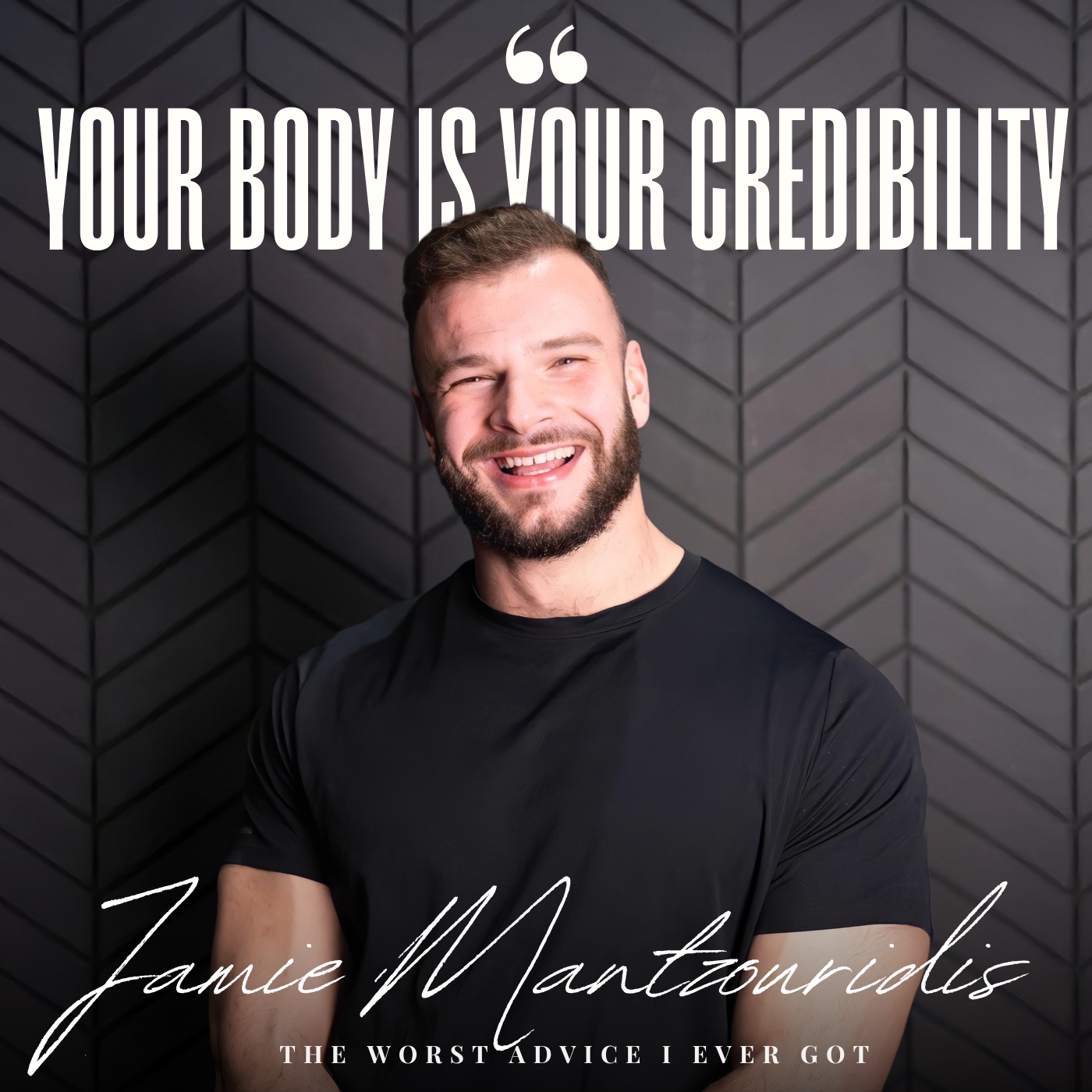
[00:00:52] Speaker B: The worst advice I ever got was your body is your credibility.
[00:00:57] Speaker A: All right, I bet there's something good in that. Let's do this. But I'm curious about, how'd you get into this?
[00:01:05] Speaker B: I was a difficult child, I think my parents would say.
I found it very hard to concentrate growing up, and I came from a. A sheltered background. My parents were relatively strict. Not like, to the point that it was uncomfortable. But my dad's Greek, and Greek people are just very, very into that academia, et cetera, et cetera, et cetera. My parents had this grand plan of me becoming this highly educated human being, but I sort of hit 14, 15 years old and decided I didn't want to do that anymore.
[00:01:44] Speaker A: Okay. Yeah.
Why the lack of interest in academics? I mean, was it just always the
[00:01:49] Speaker B: case or so I think up until I was around 13, I was ticking the boxes and I was actually doing okay, to be fair. And I fell for a glass door on a holiday. I was. I was having an argument with my sister over a charger and she kind of just like, shut the door on me as I ran at her. So obviously it was not her fault.
And, yeah, I just slipped and fell straight through. I almost died.
It was really, really bad. I lost a lot of blood. I was, I was. I was in a coma. They had to give me, like, loads of transfusions. I had like a four hour surgery in 236 stitches. It was pretty fucking bad.
[00:02:31] Speaker A: Yeah, that was horrible.
[00:02:32] Speaker B: I think when you go through something like that, you start to start to look at the bigger picture. You start to think, what do I actually want from my life? Is this just what it is? Is this what life is?
Continue to tick the boxes, or do I search for a greater meaning? Essentially.
[00:02:49] Speaker A: But did you go on to university or what was your path?
[00:02:52] Speaker B: I did. I dropped out after, like, three months.
[00:02:56] Speaker C: Oh, so that, like, from the sheltered up like, upbringing. I always think about, like, you know, when you're sending your kids to college, you want them to, like, know just enough danger in their life if you don't. If they have no danger and they go to college, then all of a sudden they're like, freedom, like, let's go. Is that what happened to you?
[00:03:15] Speaker B: Yes, 1. 1000%. I think. I think the day I drew the line was when I was sitting with my housemate. We were just. It was about 3 or 4am and we were just doing MDMA and playing Halo. I was like, I don't think this is. For me. This is gonna go really.
[00:03:33] Speaker C: College is supposed to be. Right?
[00:03:35] Speaker A: Yeah, yeah. So partying and the. And the. In the enjoyment part, but not the work part, right.
[00:03:42] Speaker B: 100%. I think I went to one lecture, which is quite embarrassing, really.
Sure.
[00:03:46] Speaker C: What a waste of money.
[00:03:49] Speaker A: What did. What did your life look like right after you, you know, left university?
[00:03:54] Speaker B: So I felt extremely lost, to be honest with you.
I had no career path at all. I had no idea what I was doing.
[00:04:00] Speaker A: Where was your mindset, you know, when all this is going on?
[00:04:04] Speaker B: I was miserable. I was visiting my mates at uni every weekend. They were still there and just wondering whether this was it. Was it. Was that just life? You know, am I just going to be doing this for the rest of my life?
[00:04:17] Speaker C: Is there like a moment where it's like a breaking point, like in this cycle, or is it just. Was it a slow grind out?
[00:04:22] Speaker B: It was a slow grind out. To be honest with you. I think it just. Gradually I started to realize how much of an impact it was having on my life.
So I had a personal trainer. I was always relatively athletic growing up. I used to swim competitively, used to sprint competitively. I was terrible at any form of team sport, though. So I thought, okay, weightlifting is perfect because I don't have to be in a team. And I was just thinking to myself, what can I do? What can I actually do? What have I actually enjoyed in my life so far?
And that kind of came to me. And I'd started going to the gym again because I'd been through a breakup. And obviously, what do you do when you go for a breakup? You get back in shape.
So I was kind of like, okay, you know what? Like, I have decent people skills. PTs look like they have a great time. My personal trainer looks like he has a great time. He drives a nice car. Yeah. I mean, I was like, okay, let me just give that a go.
And that's kind of. I Started studying and that was it.
[00:05:19] Speaker A: When, when you made that decision to go down the personal trainer route, how did your family respond? How'd your friends respond? Was it like, yeah, that sounds great or were they just like not supportive? How did that go?
[00:05:31] Speaker B: My dad thought it was a massive waste of time. My friends all thought the same, to be honest with you. They were all like, do you actually want to do this? You're not even in shape, like, you're not even that sort of like personal trainer looking character. Because at this point I wasn't, I'd not trained pretty much for like three or four years.
[00:05:48] Speaker C: I mean, that's really what the bat, what the advice is sort of is, right, is like your body needs to look a certain way to be a personal trainer.
[00:05:55] Speaker A: Yeah. I mean, how are you going to be a credible, you know, personal trainer if you got a, a dad pouch or whatever they call it?
[00:06:04] Speaker B: Yeah, yeah.
[00:06:04] Speaker C: I mean, which, honestly, it makes sense, right? I mean, on some level how did
[00:06:08] Speaker A: that make you feel? And, and kind of what did you do about that?
[00:06:12] Speaker B: So I think one of the wonders of ADHD is that if somebody tells you you can't do something, you're going to do it back twice as hard. So, so yeah, I started training more intensely, started doing a lot more cardio, started watching my DIET and yeah, 100%, I started to see those results. And of course, like, results are addictive, right? You see that in the mirror, then you want to do more and you think, how can I sort of fast track this? How can I make this move at a quicker rate?
And I think that's kind of where the anabolic steroid device come in.
[00:06:48] Speaker C: Yeah, I was gonna say, I was gonna say, so, so far, advice sounds great. It's like, hey man, you're outta shape, you're not doing a thing. Like it gets you a different job and you got any in shape, like the advice is working for you. So when's, I guess the steroids is when this advice starts to take a turn.
[00:07:03] Speaker B: Yeah. So I remember I had a, a friend who was also a personal trainer and he was like, Jay, just jump on a cycle. And at that point in time it sounded like a great idea because, I mean, I saw the results that he got. He was in fantastic shape. He was eating loads and loads of rubbish and still keeping his shape. And I just thought, okay, look, if this is going to be the thing that allows me to get to that position faster, so people see me as even more credible, then why wouldn't I do it? It's almost an investment in myself.
[00:07:35] Speaker A: So you begin a cycle. You describe it as. What is a cycle? What does that mean?
[00:07:40] Speaker B: So a cycle essentially is like a group of anabolic steroids taken together, so there might be a few different chemicals, essentially, that you would take at the same time for a period of time.
[00:07:52] Speaker A: Okay, okay. So what happened once you started using them?
[00:07:55] Speaker B: I blew up quickly.
Start in a good way?
Yeah, yeah. I started. Started to look like the Michelin man in almost, like, within weeks. Started to see this, like, crazy vascularity.
Everything blew up.
I mean, don't get me wrong, I feel like I always had decent genetics, but it just kind of exasperated everything. And at this point, I was carrying a lot of body fat still as well, so to completely almost, like, shed. That was insane.
[00:08:23] Speaker C: How long is this from, like, all right, I want to be a physical trainer to. I'm doing steroids two. I'm huge. Like, what's. What's the timeline?
[00:08:31] Speaker B: Do you want to know the honest truth? Probably about.
Probably about six months.
[00:08:37] Speaker A: So just fast.
[00:08:38] Speaker C: Just like.
[00:08:39] Speaker B: Yeah, fast. It was very much an overnight decision. It was not something that I had, like, mulled over at all. It was like, okay, I'm gonna do this thing now. Okay, I'm gonna do that thing now.
[00:08:50] Speaker A: I'm assuming for a while this is wildly successful for you.
[00:08:55] Speaker B: Yeah, so I was definitely getting busier. 100.
I was sort of going down that path and thinking, oh, yeah, like, this is what I wanted. I feel like I have a bit more purpose now.
So I felt like I developed an identity. And the identity was, oh, Jamie's that big dude. Like, nobody wants to mess with him. He's strong.
He's that personal trainer kind of guy who's always in shape, and that becomes very much your image. But the irony is, when you take anabolic steroids and you focus so heavily on yourself, you become a very selfish person. And to be a good coach, you have to be selfless and think about other people. And if you're trying to coach people how you would coach yourself, it's. It doesn't make you a good coach. So as a result of that, like, the retention of a client was. Was terrible.
[00:09:45] Speaker C: Yeah. It's like, as obviously, when you talk about steroids, people know. I mean, I don't even know if people know the actual dangers of steroids. They just know steroids equals danger. They don't really know why. So, like, what did you start to see, like, physically from taking the steroids?
[00:09:59] Speaker B: So I developed terrible acne. Really, really bad to the Point that I didn't want to take my top off. Like my.
[00:10:05] Speaker C: Which is the whole point of being so strong as you can take your shirt off. So it's like, what is that mine
[00:10:10] Speaker B: as well be fat?
[00:10:11] Speaker C: Like.
[00:10:11] Speaker B: Exactly.
And then, yeah, I went to hospital because of a bad job, Nearly lost my leg.
[00:10:18] Speaker A: Oh, my God, you nearly lost a leg?
[00:10:20] Speaker B: Yeah. So I was on IV antibiotics for about a week because I had a dodgy injection, essentially.
[00:10:27] Speaker A: Like a dirty needle or something like.
[00:10:29] Speaker B: No, so it wasn't a needle that was dirty. I just think, I mean, these things are like developed in somebody's bath, you know?
Right.
[00:10:36] Speaker C: It's not like a medical grade thing. It's just like some guy's like, yeah, this is good.
[00:10:40] Speaker B: And you know, exactly, like my first cycle that I ever took and I didn't really think about it, I was just like, I just took what this guy told me to take. But it turns out that's for balls, not for. Not for human beings.
[00:10:54] Speaker A: Oh, gosh.
[00:10:56] Speaker C: So, like, so you're seeing some, obviously some like, pretty crazy, gnarly physical things, but you're still taking the steroids because you're still seeing the results.
[00:11:05] Speaker B: Yeah. So the weird thing is, is I kind of went so deep down that rabbit hole that I thought that I. I need to just do this. I need to. Right.
[00:11:15] Speaker C: Your body is your credibility. Right.
[00:11:19] Speaker B: Everybody you went, you start surrounding yourself with all the same people that do the exact same thing as you. So it becomes very normal. So don't really think about it on a day to day basis. You're like, oh, yeah, I'm just gonna go pin myself in the glue on a Tuesday morning in the toilet at a gym. Like, right.
[00:11:35] Speaker A: It's not normal.
[00:11:36] Speaker B: Right.
[00:11:36] Speaker C: That's what I know. Like, yeah, If Sean said that to me, I'd be like, what are you talking about, Sean? Like, that. I don't understand what you mean. But like in your life.
Yeah.
[00:11:44] Speaker A: What?
[00:11:44] Speaker C: It's funny what normal can become.
[00:11:46] Speaker A: Yeah. So, Jamie, let me get this straight. So you're experiencing all these side effects, serious side effects, and other people are too, but everybody's just telling you, oh, that's normal. Just keep fighting through it. That's what's happening.
[00:12:01] Speaker B: Yeah, pretty much. So I had coaches at a time, and look, don't get me wrong, they're bodybuilding coaches, so this is what they deal with on a day to day basis.
And I remember I had a coach at that point in time and I was like dieting super aggressively for a competition prep and I had A friend that passed away, he sadly commits suicide. I remember my prep coach saying to me, he chose his path, now you choose yours. Do you want to do this or not?
[00:12:29] Speaker C: That's aggressive.
[00:12:31] Speaker B: Yeah. I mean, the reason why I say this is because that is the kind of mentality that you're surrounded with when you are surrounding yourself with bodybuilders. Wow. So it's very much like all or nothing, super aggressive mentality. This is all about you.
You almost adopt the pain.
[00:12:49] Speaker A: You know, there had to be a breaking point. Like, what was the point where it was like, okay, who cares that everybody says this is normal? I would have thought almost losing your leg would have been a good breaking point. But what was it for you that finally got you to see, I gotta break out of this?
[00:13:06] Speaker B: This is gonna sound incredibly strange, but I was in the bath one day.
At this point, I had been taking insulin, which, if you don't know what that is, essentially that's something that the pancreas produces naturally to digest carbohydrates. Now, obviously, diabetics take it, but people who don't have diabetes shouldn't take it.
[00:13:26] Speaker C: What is the point? Why take it?
[00:13:28] Speaker B: What is it?
[00:13:28] Speaker C: What does it help?
[00:13:29] Speaker B: So what it does is it helps you increase the uptake of carbohydrates so you can consume more carbs, which helps muscle growth, et cetera, et cetera.
[00:13:37] Speaker C: Yeah.
[00:13:39] Speaker B: But it's incredibly dangerous. If you don't have the right amount of carbohydrates, you can essentially slip into a coma. So I was. Yeah, I was sitting in the bath and my partner at the time was out for like six or seven hours, and I. I started to feel really, really dizzy.
And like, that. That was it, really. I was like, oh, my God, like, what the am I doing? Like, this is absolutely crazy. I'm sitting here taking diabetic medication to try and get big. Like, it was just mad and almost
[00:14:07] Speaker C: passing out in a. In a tub and drowning or something, you know?
[00:14:11] Speaker B: Exactly.
[00:14:12] Speaker C: Wow.
[00:14:13] Speaker B: Exactly.
[00:14:13] Speaker A: Wow. Wow. That's pretty scary.
I mean, obviously you could have died, right? I mean, that's. That's clearly. But I mean, so you. You reach that point in your mind. This is crazy. That's the breaking point. How did that affect your next steps and ultimately your credibility? You know, going back to the worst advice to be a train, it definitely
[00:14:36] Speaker B: had a massive impact on me. Coming off altogether. I didn't train for about a year. I just felt miserable. Obviously, it has this impact when you feel essentially, like, superhuman. Going back to a normal reality is Quite difficult essentially because I kind of went cold turkey. I didn't really go through like a full PS pct, which is like a post cycle therapy.
I just wanted to try and get my body back to normal in the most natural way.
[00:15:00] Speaker C: Same thing as like when you just started great, you just like, all right, I'm, I get big and then I'm not going to do steroids. And now it's like now I don't do steroids and you just stop.
[00:15:07] Speaker B: Exactly, exactly. Stopped training, stopped everything. And yeah, I think I pretty much just played video games and worked for about a year.
[00:15:17] Speaker A: So there was a true, a true like regression from how big you had gotten back to just looking like an everyday Joe like me and jb. Right, sure.
[00:15:29] Speaker B: Yeah. So definitely I lost a fair bit of muscle. So I'm 5 foot 9.
I was about 104 kilos lean. So like I was a bit of a lump. Now I'm sit. I mean then I was probably sitting around 95, now I'm sitting around 91. So a lot more of a natural sort of size now.
[00:15:48] Speaker C: But again with your clients and stuff, I mean, are you seeing them be like, oh, I don't want to train with you now because you're not this monster.
[00:15:56] Speaker B: It actually improved my work life dramatically.
Because you become more relatable. Right. If you're this bodybuilder guy that everybody looks at and probably feels intimidated by, it's not always the best business venture. And that is what I learned massively from the whole credibility side of things.
People buy into you as a person and a human being. They don't care whether you're in shape or not. I didn't lose any clients. If anything, business dramatically increased because I focus on that a lot more rather than myself.
[00:16:28] Speaker C: What changed in that coaching style?
[00:16:30] Speaker B: I think I became a lot more empathetic and understanding as a human being. Right. But I think part of that comes with age as well. Right. But age, age equals experience and wisdom. And I think people just appreciated my honesty and the fact that I was so open with them. I've always been pretty open with my clients. I've never lied about any of this stuff because I think it's important to be an open book with this kind of thing because everyone has their own struggles and issues.
So whether it's a different form of addiction, if I can share my experience, maybe it can help them to some extent.
[00:17:06] Speaker A: Jamie, that we fully believe in that. That's literally the entire basis of our podcast. Right. Is we love it when people Come on and say a. Yeah. And people that get invited to our podcast are successful. Right. But.
[00:17:20] Speaker C: Right.
[00:17:21] Speaker A: They had something happen in their life where if they're open about it and transparent about it, you know, everyone can see how you learn from it, but also how maybe they can avoid certain pitfalls for themselves. So thanks, thanks for doing this, but I'm curious. I'm, I'm, I'm very curious about one thing.
Like you, it feels like you're having sort of a, a revelation about being just a personal trainer to being an excellent or maybe even an elite personal trainer. What's the difference, what's the difference between a, a, a, a good personal trainer and somebody who is elite?
[00:18:01] Speaker B: If somebody just wants to feel a little bit better about themselves and fit into a dress again, you don't need to stick them on a thousand calories a day and get them doing 90 minutes of cardio a day, you know?
[00:18:13] Speaker C: Right.
[00:18:14] Speaker B: Naturally. When I was a bodybuilder, I attracted that kind of clientele, but I don't coach any bodybuilding clients anymore. It's all people that have families, people that are just busy human beings that just want to make themselves feel a little bit better, want to drop a little bit of weight and feel a bit more confident on their summer holidays and want to be able to, Want to have help managing a busy lifestyle, essentially.
So, yeah, I mean, it's so far from what I initially started off.
[00:18:46] Speaker A: That's a great point. I, I think if I walked in and was going to work with a personal trainer and he looked like, you know, Arnold Schwarzenegger from back in the day, I would probably not want him to be my trainer because I would literally fear for my life, probably.
[00:19:02] Speaker C: Like, that guy can do some stuff.
Yeah. Why do you think, like, honesty. You said honesty a couple of times when it comes to, like, being a good trader, like, why is that so important to you now?
[00:19:14] Speaker B: Because I think it shows integrity.
There's a lot of people that lie about how they've achieved what they've achieved. I wouldn't be sitting here still being in this good shape if I never had started off taking antibiotic steroids. And people do still look up to you. People do still look up to you. So they need to understand what is realistic for them to achieve.
Obviously, naturally, like I said, first and foremost, obviously, yes, I've taken anabolic steroids, but I also do have decent genetics. So people are always going to look up to you and think, okay, I want to look like that guy. So I think it's Very important for people to know how I got there, if that makes sense.
[00:19:55] Speaker A: Sure, yeah. Does it. Does it feels a little bit like your path was. Was impacted by taking things to extremes? How do you think people can better deal with converting themselves into something better without feeling like they have to go extremes?
[00:20:14] Speaker B: It's interesting because obviously, ultimately, for example, it can be such a toxic, negative thing if we are going 0 to 100. But I also think sometimes some of the best decisions we make in life are ones where we do the thing and then worry about the outcome afterwards, if that makes sense. So sometimes, I mean, it just depends what you channel the energy into. Right. If it's something negative, then it's bad. If it's something positive, it can be fantastic.
[00:20:42] Speaker C: Well, if you had one thing that you, like, wanted to leave the audience with, you know, today, what do you think it would be?
[00:20:50] Speaker B: Don't do drugs, kids.
I love it. I'm joking. Not that you will work it out in the end.
No matter how lost and stuck that you feel that you might be right now, it will work itself out.
You will find a way. You will find something that works for you.
[00:21:09] Speaker A: Well, this episode works for me, and I know it worked for jb, and it's really going to work well for our listeners because, um, there's so many morals to your story that people can take away. So, Jamie, I can't thank you enough for joining us today and. And continuing your trend of sharing your honest story. It's so helpful to us, so I really, really appreciate it.
[00:21:31] Speaker B: Thank you so much for having me, guys. It's been. It's been really, really fun.
[00:21:35] Speaker A: You know, jb, the thing that really stood out to me about Jamie's story is how dangerous the situation actually was. You know, it. It didn't feel dangerous to him at the time because of the environment he was in, but it really was dangerous, you know, And I guess when everyone around you is doing the same thing, the extreme starts to feel kind of normal.
[00:21:53] Speaker C: Yeah, I mean, that part definitely stayed with me. You know, from. From outside. You hear the story and you think, how does somebody end up getting their leg nearly cut off and just brushing it off? You know, but when every coach and every friend and every person in his circle is doing the same thing, it doesn't feel like. Know, like it's bad advice, like the worst advice. It just feels like the way things are done.
[00:22:14] Speaker A: That's what's so intriguing to me about this, about this conversation. You know, Jamie, he didn't think he was trying to do Something reckless. He was trying to be credible in his profession, so he was listening to the people around him and following what, you know, were the norms.
[00:22:30] Speaker C: Yeah, right. That's the really tricky part about advice in general, you know, that we keep hearing on this show, because most of the time, it doesn't sound bad at all.
[00:22:38] Speaker A: Yeah, no, and. And this is a lesson that goes way beyond just fitness and in Jamie's case, you know, ultimately, you know, using steroids. Right. It. I guess, currently, like in the times we're living in now, it's really easy for all of us to, you know, converse. Only inside circles where everyone thinks the same way, reads the same things, reinforces the same ideas, kind of normalizing those things that maybe shouldn't be normalized.
[00:23:04] Speaker C: Yeah. I mean, if you only talk, doesn't matter what we're talking about, if you're only talking to the same people who already agree with you, it's pretty hard to ever step back and ask whether the advice or the opinion or whatever it is you're following actually makes sense.
[00:23:17] Speaker A: Yeah, that's. That's why I really appreciate stories like Jamie's. They're valuable, and they're great examples of really, how our show tries to go far beyond just the title.
You don't need to have tried steroids to find real value in what Jamie's story is saying to you.
[00:23:34] Speaker C: Yeah. Looking beyond the title, it's a great way to put it. That's what we're doing here. Making sure that every lesson can be learned by anybody, regardless of whatever your background is or the background of the guest.
[00:23:47] Speaker A: Yeah. Yeah, exactly.
Well, Jamie, thanks again for being open about your story and for sharing what you learned along the way.
And thanks to everyone listening. We hope you got as much out of this as we did, so we'll look forward to seeing you next time for another episode of the Worst Advice I Ever Got.