Episode Transcript
[00:00:00] Speaker A: Foreign.
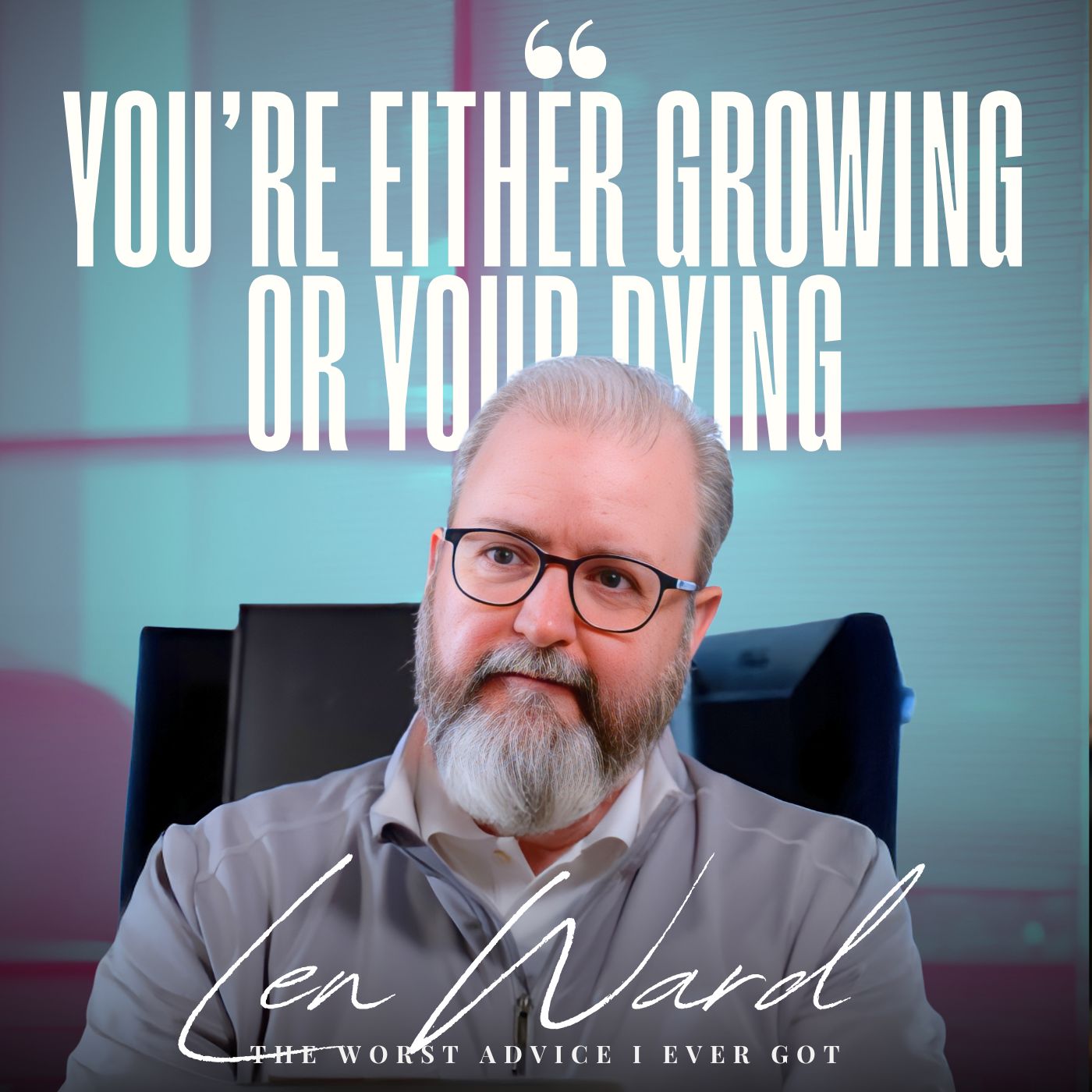
[00:00:04] Speaker B: Hey everybody. Welcome to another episode of the Worst Advice I Ever Got brought to you by your friends at Smith and Howard. I'm your host Sean Taylor along with my producer jb and today our guest is Lynn Ward. Lynn is an AI marketing and workflow expert and the driving force behind Comexis where he partners directly with CEOs to help them rethink how their businesses actually operate in an AI first world.
Now, he's not just talking about trends. He's building systems that replace inefficiencies, eliminate bottlenecks and fundamentally change how companies grow.
With a background that spans Wall street, agency leadership and now cutting edge AI implementation, Len brings a rare mix of financial understanding, operational thinking and real world execution.
Today we're here to talk to him about the worst advice he's ever got.
Lynn, thanks for joining us today.
[00:00:58] Speaker A: I appreciate you having me. Thank you.
[00:01:00] Speaker B: So Lynn, we love to jump right into the pain. What's the worst advice you ever got?
[00:01:05] Speaker A: Worst advice ever. God was if you're not growing, you're dying. Gotta hire more people.
[00:01:09] Speaker B: Yeah.
[00:01:10] Speaker C: Ooh, the Tommy boy reference. I love it.
[00:01:13] Speaker B: Gotta hire more people. So that. I've heard that a lot. I tell people that a lot. Frankly, if you're not growing, you're dying.
So talk about maybe a little bit of history of the accuracy or inaccuracy of that and just a little bit about where that comes from for you. A specific individual or just the, the aura of the, of the universe telling you that.
[00:01:35] Speaker D: I think that was more along the
[00:01:37] Speaker A: lines of that was the agency agency mantra. Maybe pre Covid where, you know, a lot of agencies felt as if they were going to be retained for marketing services based upon the headcount they had. Because a lot of times, you know, clients will come in, they want to see the operation and it like if we had more bodies, they were definitely going to hire us. So I fell into that trap. Much like a lot of agency owners where you're just hiring people almost to the point just to make it look really good, like your agency's growing, not even paying attention to the finances on the books. It's more like, hey, how many more people can we hire? Because then we look bigger and bigger, thinking that was why agents or, you know, clients were going to hire you. And as I kind of went along, I realized that's really not the reason they're hiring you.
[00:02:22] Speaker B: Yeah, yeah, for sure. And I mean, look, I'm in a people business. We bill my inventory goes home every Friday and I hope it comes back Every Monday. Right.
We like to put it to use and we bill by the time we spend on working for clients and bringing them solutions and other value.
Len, you mentioned that this came from this agency mantra. Did it work for years.
[00:02:46] Speaker D: I mean, yeah.
[00:02:47] Speaker A: I mean you're hiring more people did work. I mean we were getting, you know, we were obtaining business and so forth. But it was not financially sound though. I mean, I can tell you that. I mean, hiring more people is not the way to go. And I think a lot of agencies learn that rapidly. Like, you know, you can have a bunch of people, but you got to make the revenue to cover those people.
[00:03:06] Speaker B: A lot of these agencies are doing this because it's, it's kind of what they've seen. Either they work for a place, they saw them do it, now they have their own place and they're doing it themselves. It's kind of ingrained in the business. Right?
[00:03:16] Speaker A: Ego. Yeah, it's definitely an ego thing with agency owners. 100%. I mean it was.
You would turn on Instagram or you know, Facebook. Look who we hired. We hired this person going on and on. Not we hired this person because this is the outcome they provide your business.
So it's like a trophy, Another trophy, another trophy. And every agency gets. Got caught up in that.
Luckily it's a little bit by the wayside now. But yeah, so that, that's. It just was one of those things where again, if you're not growing, you're dying. In every agency was almost like an arms race on hiring people.
[00:03:47] Speaker C: If you're a company that's people is their product and they, you know, billable more people is more billable hours means you're making more money. Is that still true for them, you
[00:03:56] Speaker A: mean in this current environment? Sure, yeah, no, that's all done. I think it's with AI and everything that's going on right now, the less people and the more AI stacks you have is where your value truly lies.
[00:04:07] Speaker B: Yeah. So Lynn, let's go back a little bit here because you said there's a mindset of top line growth equals bottom line growth, which isn't always the case. But you're mentioning something now that's more than just this model of utilization of people. You're mentioning automation. Right. And so that's a new twist on things just in the last five years, right?
[00:04:27] Speaker A: Oh yeah. I think AI is completely upended the way everybody looks, especially the ad world. But what's really going to upended, which is happening now, which is the agent world, which means we're moving into agents and agents being able to handle things for you. Tasks that, you know, entry level marketers were. Are able to do right now or were able to do that. That job is rapidly becoming eliminated.
[00:04:49] Speaker B: Did this model start breaking during COVID or when did you realize that this traditional model was breaking? And where we're kind of in an evol?
[00:04:59] Speaker A: I have a tremendous consultant that I've leaned on for years. He is a, you know, retired titan in the ad world and he would always kind of really come in and help us out. And he was the first to kind of put a financial number on it. He would walk into an agency, he would count up the headcount, and he would say, are you making this much money? And they would say, oh, no, we're not making that. He goes, all right, well, those five people right there had to go. And that's. And that's kind of. And I learned that quickly. And once I. That was taught to me, you know,
[00:05:25] Speaker D: I always came from background of finance.
[00:05:26] Speaker A: I got it. But you do get caught up in this hype of hiring people. You do.
[00:05:30] Speaker D: It's again, an ego thing.
[00:05:32] Speaker A: But it was that $150,000 number that stuck to me and I was like, got it. So $150,000, you got a profit, 40% on that and so forth. And if you're not at 150,000 per employee, you got a problem on your hands.
[00:05:45] Speaker B: So a little bit of revenue not keeping pace with your hiring and it ultimately impacts the bottom line. It is. Is there also pressure on the ability to charge the margins we used to charge in the past? Is that part of the problem now too, Lynn?
[00:05:59] Speaker A: Oh, I don't think you can charge anymore where you used to in the past. I think. I think now you got to charge per outcome.
[00:06:04] Speaker D: I think you are going to be
[00:06:05] Speaker A: able to charge a little bit more money now because of the AI being implemented, because it's called the way it is. If people are like, oh, hey, that makes it easy, I could tell you to a man on my team, they tell you their job's ten times harder right now because they're trying to install
[00:06:16] Speaker D: it and there's so much work going on.
[00:06:17] Speaker A: But I think the way agencies bill, hourly model, all of that, that's all gone. You. That's the days of charging per hour and getting a scope of work of, you know, we're going to give you 50 hours. Those days are. They're pretty much gone. Unless you're just implementing. If you're still just implementing, like implementing Blog posts, implementing social media, you have to do design. That's a little different.
[00:06:38] Speaker D: But when you're talking about overall marketing
[00:06:40] Speaker A: strategy and running an actual campaign, even content to a point, you can't really charge the hourly rate we used to. The hourly rate, I think in the marketing world at least is gone.
[00:06:50] Speaker B: What are the real consequences or what are the pain points of sticking with the traditional model or sticking with the old advice?
[00:06:58] Speaker A: I don't. You mean sticking with the model of the hourly rate?
[00:07:01] Speaker B: Yeah, the hourly rate. Or you, you got to hire more people to grow. Just what, what is the potential consequences of, of, you know, this AI stuff is whatever. Or I don't, you know, I'm sticking with the tried and true. What are the real consequences that these companies are going to face?
[00:07:18] Speaker A: They'll go out of business.
[00:07:19] Speaker B: So.
[00:07:20] Speaker A: Yeah, yeah, because your clients know what AI can do, your clients know the work that they typically were paying for, that's not going to be relevant anymore.
[00:07:30] Speaker D: And you have to think about the entire marketing shift.
[00:07:33] Speaker A: Search and retrieve is, is, is dissipating and dying.
[00:07:36] Speaker D: Solve my problems here. You know, search retrieve, you, you literally
[00:07:39] Speaker A: charge by the hour.
[00:07:40] Speaker D: That's how you make your money.
[00:07:41] Speaker A: People search, they retrieve, they go to Google, they find blog posts, they read, you put them through the rabbit hole and out comes a lead. Solve my problem is, you know, if somebody ask a question based upon what they have, they show up at your client's front door, they understand 95% of what they need. Your team just has to deliver the final 5%. So complete, utter change of how we do marketing now.
[00:08:00] Speaker D: So agencies that continue down the road
[00:08:03] Speaker A: of trying to say, we're just going to gut through it, we weathered the storms. You've never weathered a storm.
I lived through the dot com era. That was tough. AI is, is tenfold.
[00:08:13] Speaker B: If you come across 100 agencies today, how many get what you just said, that they will go out of business if they stick to the old model?
[00:08:22] Speaker A: 20%.
[00:08:23] Speaker B: Yeah. So one in one in five hear it, see it, get it, and are adapting to it. And 4 and 5 are not, is what you're saying.
[00:08:30] Speaker A: Yeah, I think the ones that are, the ones that are just trying to maybe are run by a little bit older than us, than me, you know, early 50s. And I think they're the ones that are just run, run gas out of the car, per se, just to kind of get to the end of the line, give me to the finish line.
[00:08:44] Speaker B: And yeah, my problem to somebody else, I'll make it.
[00:08:47] Speaker C: Yeah, new person's problem. Do you think this is just a big company problem or is this an every kind of level problem?
[00:08:54] Speaker A: I think it's going to be every level problem. But I do think, and I have nothing but the utmost respect for Madison Ave agencies and so forth. I work with a lot of them. I really do. They're brilliant, bright people, but I think they're the ones that are directly in the crosshairs. You can't, you can't build an agency right now with 10, 15,000 people anymore. Those days are, you know, But I do think even the small ones are living on the implementation aspect of things. We'll, you know, we'll do this, we'll do that. But as the rise of the agents are becoming rapid implementation is, is. I mean, I think within 12 months or less, you're going to be able to pretty much have an agent run a marketing campaign up to 80% for you. That's.
[00:09:34] Speaker B: It's interesting because I think some people might just naturally think that the larger the company, the more financial resources there are to apply new technologies, implementing, having teams to implement the technologies versus a small agency who's having to, you know, be the cook, bottle washer, the whole bit. Right.
Why is it that bigger companies can't do this when they clearly have more resources to be able to apply to it?
[00:10:05] Speaker A: That's actually a great question. So I'm in a camp where AI, A lot of people are worried about losing their jobs because they don't know AI right? We hear that all the time, AI is going to take my job.
[00:10:15] Speaker D: What's going to take your job are
[00:10:17] Speaker A: the companies that are run by people who are not really embracing AI and they're, they're, what they're doing is, they're, all they're doing is they're giving AI
[00:10:25] Speaker D: like copilot or another tool to their team underneath them. And they're saying, do your specific tasks
[00:10:31] Speaker A: faster is all they're trying to do.
[00:10:33] Speaker D: They're not lending any support, they're not training them, and they're not realizing that the fundamental shift of we're moving from search and retrieve to solve my problem. All you're doing is speeding up the work on search and retrieve, which is a world we're leaving. You're not implementing AI to solve your customer's problem. So the individuals that are going to lose their jobs are not the people that are going to be replaced by AI. You're going to lose your job because you're working for a company of 10, 15,000 people where the leadership never embraced AI the way they should have and they're going to wake up one day and there's a five person shop with a kick ass marketing stack that's going to just outrun you and they're going
[00:11:08] Speaker A: to start landing Coca Cola and so forth because they know how fast they can move and they're going to charge
[00:11:13] Speaker D: a fraction of the rate because they don't have to pay all that.
[00:11:16] Speaker A: So yes, the money will help, but at some point the amount of CEOs and people up top who don't understand
[00:11:23] Speaker D: AI at all, outside of maybe rewriting an email, you'd be shocked.
[00:11:27] Speaker B: Is this a real cowboy market still where people are doing their own things, building their own things and everybody's kind of doing the same exercise, or is there any benefit to small groups coming together and building tools that, that multiple groups can benefit off of?
[00:11:40] Speaker D: You could, but I think the, the reality is that you want to try
[00:11:43] Speaker A: to position your agency almost not to join with other people, but to be a co pilot.
[00:11:48] Speaker D: We're not that far from AI saying,
[00:11:50] Speaker A: hey, you need this product, we're going to build it. And it just literally whips it up real quick.
[00:11:54] Speaker D: So it's that. You see what I'm saying? Like what AI is doing is starting
[00:11:57] Speaker A: to take away like all the escape
[00:11:59] Speaker D: routes of marketing turn.
[00:12:01] Speaker A: Well, we can go here, we can
[00:12:02] Speaker D: go there, it's starting to close those doors off and that's what's concerning. So like where does that leave us from marketing? And that's a conversation for another time. But so I think the advice right now is learn everything you can about
[00:12:13] Speaker A: AI as an agency and learn to
[00:12:15] Speaker D: be an invaluable pilot where any tool that's put in front of you, no matter what it is, you can pilot it, you can fly it. That's where the true value is going to lie for agencies going forward.
[00:12:24] Speaker C: A lot of people live listen to our podcast are college age kids who a lot of their parents listen to this podcast. So as somebody who's getting out of college now, going into this world where the entry level is sort of moving up, you need to know way more than you knew five years ago and 10 years ago. And AI is making every single person an expert on whatever they feel like they want to be an expert on. What are they doing to make sure they're kind of staying ahead and being in this new economy.
[00:12:51] Speaker A: They need to understand business, they need to understand the fine, they need to drop back and understand the finances of what it is to run a business. They need to understand SOPs, they need
[00:13:00] Speaker D: to understand business processes.
[00:13:01] Speaker A: Don't walk into a shop and say, hey, I'm a really good social media marketing person or I can do SEO. You need to understand the business outcomes of what you are trying to produce with the marketing campaign at hand. So the college students that literally take
[00:13:14] Speaker D: a step back and say, all right,
[00:13:15] Speaker A: I'm going to learn business, you know, I'm going to learn how to do it and maybe take a job that has nothing to do with their marketing degree or anything along those lines. It's just where they're really understanding accounting and bookkeeping.
[00:13:26] Speaker D: Because the minute you understand the processes of a business, the minute you understand
[00:13:29] Speaker A: the finances of a business, at that
[00:13:32] Speaker D: point you can then start layer AI on top of that and you're starting to make smarter and smarter decisions.
[00:13:37] Speaker A: So my advice for people coming out
[00:13:39] Speaker D: is don't just stick in your secular
[00:13:41] Speaker A: world of what you learned. You really have to understand how a business operates.
I think that is going to be paramount going forward.
[00:13:48] Speaker B: I hear a lot of businesses saying we're going to wait.
We don't have a development team, we don't really have people on staff and know what we're doing on this stuff. So we're going to wait and see.
[00:14:00] Speaker C: We'll cross that bridge when we come to it.
[00:14:02] Speaker B: Yeah, like talk a little bit about that relative to this whole topic of waiting and seeing what happens.
[00:14:10] Speaker D: So when I was part of the
[00:14:12] Speaker A: dot com era in the late 90s, early 2000s, when you heard the intelligent people in the room talk, they had time.
[00:14:20] Speaker D: The infrastructure, the Internet wasn't as built
[00:14:22] Speaker A: out as people think it was back in 98, 99, 2000. It was built, but it wasn't, it wasn't where it needed to be yet
[00:14:28] Speaker D: you don't have that now. It's built. My prediction, in the next 18 months or less, you're going to see two or three major companies that are going
[00:14:34] Speaker A: to close because they waited, because they're just getting, you know, the pants beat off them by competitors who they never in a million years would have thought.
[00:14:43] Speaker D: And I think that's one of the
[00:14:45] Speaker A: biggest takeaways is competitors.
[00:14:47] Speaker D: Keep looking across the river. There's our competitor over there, same size. And they're thinking that's the battle. That's not your battle. Your battle is the two person shop
[00:14:54] Speaker A: to the left hand side that understands
[00:14:56] Speaker D: the business process is way better than you. And they're building AI stacks where those AI stacks are as powerful as your hundred thousand person shop.
[00:15:03] Speaker A: Waiting's death fastest Company is going to win in this new world. Speed is your new moat.
[00:15:08] Speaker C: There's a lot of upside obviously for AI moving forward like on the thing. But what's as is anything with comes with major change. What's going to be the downside shift that we sort of see over the next couple years?
[00:15:19] Speaker A: We're going to have people lose their job.
[00:15:21] Speaker D: That's going to happen.
[00:15:22] Speaker A: I think you're going to go through a bit of an ugly period for a while. I think some people are going to get displaced. Entry level people, customer service, anything where you know it's, it can be automated. Like, you know, you're think about the individuals that are just answering the same questions over and over again or their job is kind of routine.
[00:15:39] Speaker D: I think that's going to be a
[00:15:40] Speaker A: bit of a problem.
[00:15:41] Speaker D: But the one thing I do believe is once we get over that hard, you know, hard road or you know, that tough time, I think you're going to come into the golden age of entrepreneurship in our country. I think you're going to come into a space where a lot of people are going to run their own businesses. I think you're going to come in where AI is running 247 and humans are going to drop in and drop out. It's going to augment our time. I think you're going to work three days a week. I think life's going to get a little easier. I think medical is going to advance dramatically.
Systems and processes are going to dramatically, you know, improve. But to say that there's not going to be a bit of a downturn and a downside, there's going to be, we're hoping that other roles are created
[00:16:16] Speaker A: and other, you know, there's jobs you can find.
[00:16:19] Speaker D: But I think the number one job
[00:16:20] Speaker A: that's going to come from this is going to be entrepreneurship, which is, which is great.
[00:16:24] Speaker B: Where else is this going to be impactful? Where's this going to be negative and where is this going to create opportunities?
[00:16:31] Speaker D: I think knowledge based workers are in trouble.
[00:16:33] Speaker A: So a lot of lawyers, I think a lot of the junior lawyers that are coming in, it could be a bit of a problem for them. Accounting things where you can kind of go in and if you have to
[00:16:43] Speaker D: go search for data databases to get your answer, you have to kind of identify businesses like that, business services like business consulting and so forth. I think things like that are definitely going to be impacted. To answer your question, I think you
[00:16:55] Speaker A: said what's the upside going to be?
[00:16:56] Speaker D: I think healthcare, we're going to see
[00:16:58] Speaker A: A revolution like you've never seen. I just got done reading an article.
They were saying how the first person, somebody famous, that is the first person that was born this week is going to be the first person to live to 150 years old. That's going to happen. They're going to probably work to their almost 90 and they're going to feel like they're 50. So that is going to take place.
[00:17:16] Speaker D: So, you know, and I just think that, I think that type of stuff's going to help you out. I think if you've ever wanted to learn something, it's a great equalizer.
[00:17:24] Speaker A: You literally are going to be able
[00:17:24] Speaker D: to teach yourself that you're never going
[00:17:26] Speaker A: to be in the dark.
[00:17:28] Speaker D: I don't understand that. I think so as you have the capabilities or have access to this, which
[00:17:33] Speaker A: by the way, I think everyone should
[00:17:34] Speaker D: have access to it. I think life's going to get a little easier when you think about understanding things.
[00:17:39] Speaker C: If you're in the knowledge based business right now and you're thinking about this and you want to stay ahead of it and you're not, you know, to the twilight of your career, what can you do to kind of combat this?
[00:17:49] Speaker A: Read what, what? Here's the biggest mistake I'm seeing with kids in their 20s and 30s. They're letting AI create stuff and they're not digesting it, they're letting it do them for them. They're handing over paper, they're handing over
[00:18:00] Speaker D: emails, they're handing over strategy. Understand what it's bringing back to you. Read it, understand it, challenge it, question it. And your goal is every single time you use AI, make sure that you are learning something from it. Walk away and say, I got that, I understand.
You know, we're going to fall in
[00:18:19] Speaker A: this trap of oh, this is the easy game. I'm going to press the easy button.
[00:18:22] Speaker D: You're going to see the individual because human interaction is still going to matter. You're still going to have conversations with people. Business is still going to be transacted
[00:18:28] Speaker A: by I either like you or I don't like you or I either think
[00:18:31] Speaker D: you know what you're talking about. I don't think you know what you're talking about. Yes, I know AI is out there, but if you're able to basically decipher what AI is saying and have that conversation with individuals, I think that's what's
[00:18:41] Speaker A: going to separate you.
[00:18:42] Speaker D: So the biggest piece of advice I can give to the 20, 30 year old right now is if you're just
[00:18:46] Speaker A: Hitting the easy button and saying, oh, this is going to be great. You have a problem on your hands,
[00:18:50] Speaker B: Lynn, it seems like where you could have spent a 20 or 30 year career being an expert in a very technical section. Right. Like you could have been for years a corporate tax expert. Those days are kind of over, I think.
[00:19:04] Speaker A: So I think, I think the generalist is going to win here, opposed to the niche expert.
It's funny because for how many years were they telling you, you know, you know, riches in the niches and like, I mean, I mean, that was the famous line and you had to do it.
[00:19:16] Speaker D: And I get it, but I think
[00:19:18] Speaker A: right now you have to be, you have to truly be a generalist. You really do.
[00:19:22] Speaker B: Because an X, in essence, right.
Where we needed that deep technical expertise, maybe we were paying somebody full time to just be the technical guru we went to.
In a sense, we should be able to get answers to those very technical questions in an automated fashion. At the stroke of a key, correct?
[00:19:41] Speaker A: Oh, yeah. Immediately your customers and clients are going to have that at the stroke of a key.
[00:19:46] Speaker B: Right. So they may not even need you as an agency or an outside professional to help them at all. They'll just do it themselves.
[00:19:52] Speaker D: Yeah, but you know, that's.
[00:19:53] Speaker A: And that you make a great point. So for years, marketers were always taught because Google, AdWords and Facebook would make it very easy to market. Right. You could, you could really, anybody could sit down and start doing this stuff.
[00:20:03] Speaker D: And that was a marketer's biggest fear. I can't tell you how many times I would interview kids or I would
[00:20:07] Speaker A: talk to people and they would say, oh, yeah, but everything's going to be automated, you know, and they're going to
[00:20:12] Speaker D: be able to do it themselves. I'm like, yeah, but you're missing one point. They have a business to run.
[00:20:16] Speaker A: They don't want to be doing pay
[00:20:17] Speaker D: per click and they don't want to do a Facebook ad. They're hiring you to do that so much like a financial advisor. Yes. I may walk into the front, you know, go into your office and sit down, have a conversation about my retirement.
[00:20:27] Speaker A: And yeah, I may know 95% of what you know. But you know what, I'm not making the trade.
[00:20:32] Speaker D: I need you to analyze to make sure that I'm doing the right things. So I think the last 10% is going to become the most important part of business going forward. The actual, you know, that understanding of knowledge of AI and then the understanding
[00:20:45] Speaker A: of implementing it, because I don't know
[00:20:47] Speaker D: as humans if we're ever going to truly want AI making the final decision on, is this where we operate, you know, on the body or is this where we put the money for a tax shelter like that. Final, final decision.
I don't know how you guys feel.
[00:20:59] Speaker A: I'm still going with the human.
[00:21:01] Speaker B: Yeah, yeah.
[00:21:02] Speaker C: I feel like there's going to be some stuff, right Sean, where you're just like, I, like I can I believe you up to 99. But then I'm, you know, before we put this incision in my neck, I think I'm gonna want a surgeon to be like, yes, that's actually, that's correct.
[00:21:17] Speaker B: Well, yeah, I think it's going to depend on is it a leaf, branch, trunk or root issue that you're dealing with on the tree? Right. You know, I think that's going to be part of it. Yeah. You know, I think part of me says where professionals, no matter what line of business they're in, have maybe spent 80% of their time in the past accumulating data together to then spend 20% of their time advising their clients, perhaps AI can role reverse that and let AI handle the data 80% of the time and let the, the professional only have to check the data with 20% of their time and spend 80% of their time advising their client. That wasn't a question, that was, No, I, I think a gut feel. What do you think, Lynn?
[00:22:05] Speaker A: No, I think it's a great observation. So when I'm bought into companies and have a conversation, I say we're moving from search retrieve to solve my problem. It's going, and I think this is going directly to your point about like,
[00:22:15] Speaker D: you have to remember for the better
[00:22:16] Speaker A: part of 25 years in the digital landscape that customers had to enter your funnel and had to adhere to your funnel metrics.
[00:22:24] Speaker D: Right now with AI, your company is
[00:22:27] Speaker A: going to have to understand that they have to adhere to how the consumer is going to.
[00:22:30] Speaker D: It's their funnel that you're coming into and you have to be built and
[00:22:34] Speaker A: knowledgeable enough to work through their funnel.
[00:22:36] Speaker D: Literally answering your question to the. I agree with you 100%.
[00:22:40] Speaker A: Couldn't agree anymore.
[00:22:41] Speaker D: That last 20% is where your value
[00:22:44] Speaker A: is really going to lie. So just kind of riffing with you,
[00:22:46] Speaker D: but I, I agree, I couldn't agree.
[00:22:48] Speaker C: Yeah, it's back to your, like we glossed over it a little bit. I'm sure some people were like, wait, what did he just say? Your three day work week that you think people are going to go towards.
[00:22:56] Speaker A: I, I think that's common. I don't think there's any doubt. I think three day work week is going to be upon us. I, you know, I know that's kind
[00:23:02] Speaker D: of fantasy land but if we are
[00:23:04] Speaker A: through one of the biggest, you know, we'll call it revolutions we've ever seen in business right over the last 120 years.
[00:23:10] Speaker D: Well, you know, why would the five
[00:23:12] Speaker A: day work week almost sounds like horse and buggy, like it doesn't make any sense. 9 to 5.
[00:23:16] Speaker B: Hey Lynn, this is gnawing at the back of my neck as we're talking about this. I'm not the smartest guy in the room. You seem like a very, very intelligent person. But I'm sure if the Mensis society were here, we'd all finish last.
[00:23:30] Speaker A: Last.
[00:23:31] Speaker B: But, but, but There was a 20, 25 S P global survey of a thousand enterprises and it found that that 42% of companies have abandoned most of their AI initiatives and that's up like 17% from the year before. So if we all know this imminent change is upon us, why are so many companies bailing on their AI initiatives right now?
[00:23:55] Speaker D: Let's say they go to chat GPT, right?
[00:23:57] Speaker A: We all do and we ask a question and we're trying to plan something. Like imagine you're trying to plan a vacation. We'll do something simple.
[00:24:03] Speaker D: Could you imagine clicking after you got all those answers within five minutes quick and you got all the information. Could you imagine then portaling over to a website where you don't have to start searching for things, looking for things, hoping you're finding it. Oh by the way, read this blog. You know, could you watch my, you know, three and a half hour webinar like whoa. So the reason you're abandoning it is because all you're trying to do is speed up tasks in a search and retrieve world, not understanding that you need to completely rebuild your business from the bottom up and again that is solve your customers problems.
[00:24:34] Speaker B: Let's talk about, well billing. Let's talk about how we bill for our services, right? Because traditionally this bill by the hour set up, your profession has been there. I assume that goes away. And how does that get replaced?
[00:24:52] Speaker D: I think the billable hours that will
[00:24:54] Speaker A: stay will be people still working with their hands. So I think if you know you have an electrician come in, you know, he's, you know, you're two hours, like that's a different story. You're, you're there, you're, that's an hourly rate.
I think in the B2B world if we're looking at that, or even the B2C world, but your service base, it's the outcome. So if you needed to develop your estate plan, which is going to provide you to, you know, or your retirement, which is going to pay you $125,000 a year for the 20 years you'll be retired, pending your living, what is that? What does that worth to you from you to be able to do that to you?
[00:25:25] Speaker D: Because how many questions will you get?
[00:25:27] Speaker A: Well, would you use AI?
[00:25:28] Speaker D: Did AI build all the tax records for you today? Like that's what they're going to say. But if you say, here's the outcome
[00:25:34] Speaker A: and I'm going to deliver that Outco, that's the new billing model.
[00:25:37] Speaker C: Well, especially it rewards people for being inefficient. Right. And with AI, that it's the whole thing is the world is going to become much more efficient and the less, the longer it takes you to do something, the more money you get paid. Never made any sense to me anyways.
[00:25:51] Speaker A: Yeah, Speaking up hours. Yeah. Which is.
[00:25:53] Speaker C: Right, exactly. You don't pay for that. When you go to see a doctor, you're not paying for the six minutes he talks to you. You're paying for the 30 years of career that he's had to make sure those six minutes are important to you.
[00:26:01] Speaker A: Right?
[00:26:02] Speaker D: Yep.
[00:26:02] Speaker A: That, that's, that's 100%. Right.
[00:26:04] Speaker B: So, Lynn, JB bringing it back to the worst advice, right? You're either growing or you're dying. Does that hold up in some way today? Like, what does that look like going forward?
[00:26:15] Speaker D: I don't think you, everyone's like, well, everything's going to get wiped out. I don't think every customer service agent
[00:26:19] Speaker A: is going to get wiped out.
[00:26:20] Speaker D: I think if you have 25 customer service agents, you're going to probably be down to five. You know, if you have, if you're an internal marketing team, no, you're not
[00:26:28] Speaker A: going to lay off the, you know,
[00:26:29] Speaker D: a major, you know, holding company is not going to walk in and lay off everybody. But I don't think you're going to have 100, 100 copywriters that you're going to have 10. You know, I think it's just, it's going to be like a slimmed down
[00:26:39] Speaker A: version of what it's going to be.
[00:26:41] Speaker D: I just think that if I was
[00:26:43] Speaker A: vetting between two companies, right. I was going to hire for me, and if I walked in and If
[00:26:47] Speaker D: I saw 200 people and then I walked over across the hall to their Competitor and I saw five. I'm not just doing a five because I think it's cheaper. I'm doing a five because I know they're leaning on AI.
So to me, I think the new
[00:26:58] Speaker A: ego thing is going to be, look
[00:27:00] Speaker D: at what we produce with just five people. Not because of, you know, anything else, but I think that's going to be the new Flex. And all you got to do is go look at the history of America. You would go by the assembly lines, right. In 1900, there's, you know, 10,000 people creating products. But by the time you got to the 50s or 60s with, you know, with automation, you know, it looked a lot different. I think that's kind of where we're headed.
[00:27:21] Speaker A: We're headed back to a shop of two or three people. But because of the products that you're being built, the AI stacks, your efficiency and how quick you move is. Is really going to be the thing
[00:27:30] Speaker D: that will set you apart from the large shop.
[00:27:32] Speaker B: Yeah, it's not size, it's speed. Kind of the new value, the new currency.
We kind of like the speed, not size, when it comes to our episodes, because they're all about 25 minutes.
[00:27:46] Speaker C: Yep.
[00:27:46] Speaker B: And they all deliver great value, just like you just did with us today. Lynn, I really appreciate you joining us today, and thank you sharing your worst. I know our audience is going to really, really benefit from it.
[00:27:57] Speaker A: Great. I appreciate you having me. Thank you.
[00:28:00] Speaker B: All right, jb, I'll tell you, I came into this episode thinking we're going to be talking about AI and agencies, and we did. But I think what Lyn really gave us was a much bigger business lesson. Look, I know how important growth is, and honestly, to me, if you're not growing, you're dying. Sounds like good advice.
But Lynn pointed out is that growth can almost become a costume. You know, more people, more payroll, more activity, more noise. It's just more for more sake. It's something I think anyone listening who's growing a business needs to step back and ask themselves. Right?
[00:28:31] Speaker C: Yeah, that definitely stood out to me. You know, the idea of, like, look
[00:28:33] Speaker A: how big we are.
[00:28:34] Speaker C: It's like it used to be a Flex, but now the Flex is actually, you know, at least what Len was saying is, look what we can do
[00:28:39] Speaker A: with just a couple of people.
[00:28:40] Speaker C: Look how lean, look how fast we can be. There's just a different way of looking at, like, what a win. It's.
[00:28:46] Speaker B: Yeah, that's a great point. You know, flexing for size versus flexing for efficiency. And I thought Lynn did a really good job of separating fear from reality. Right. This isn't just AI is coming for everybody. Good luck out there. His point was more practical than that. The companies that win are going to be the ones that understand the business problem, use the tools well, move faster. And the ones that just hand everyone to, you know, something like Chad GPT and say, you know, make it better, that that's not going to be the answer.
[00:29:14] Speaker C: Yeah, he had a great point on how AI has become this catch all type of word for like productivity and well, it absolutely is going to make things faster and it can make a couple of things easier. It you still have to use it in the right way to actually help you and your clients. He's not saying fire everybody and replace them with Claude tokens, you know, he's just saying you're going to have to adopt this or you're going to be in some trouble.
[00:29:35] Speaker B: Yeah, growth is not automatically good. Bigger is not automatically better.
And we've always done it this way is getting more expensive by the second. Well, I hope you got as much out of this episode as we did. Thank you to Lynn Ward for joining us and for giving us a lot to think about. And thank you as always to Smith and Howard for supporting this show and for everyone out there that's listening. We appreciate you all and we look forward to seeing you next time. On the worst advice I ever got.