Episode Transcript
[00:00:00] Speaker A: Foreign.
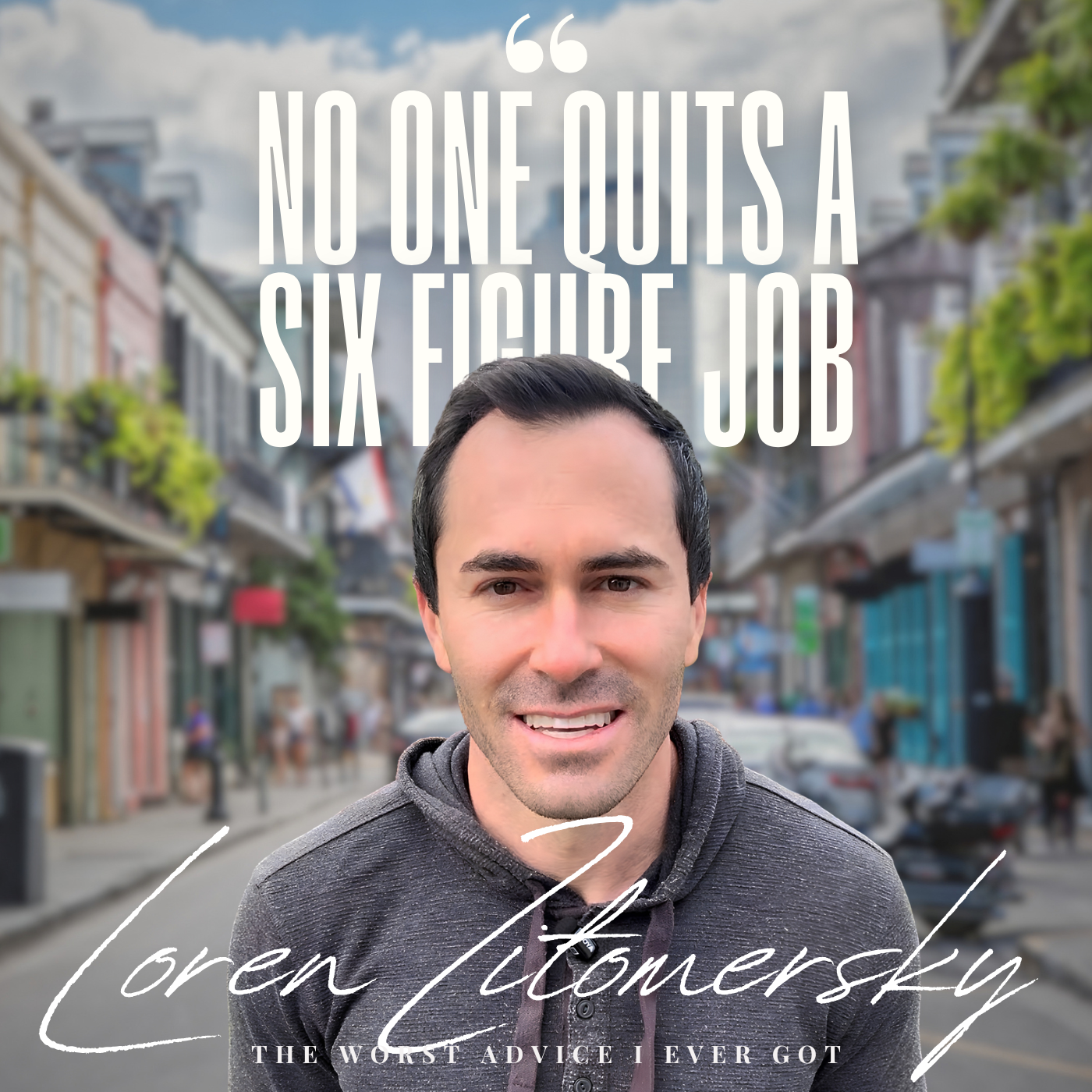
[00:00:05] Speaker B: Hey, everybody. Welcome to another episode of the Worst Advice I Ever Got brought to you by Smith and Howard. I'm your host Sean Taylor, along with my producer jb and today our guest is Lauren Zitomerski.
Lauren spent over 16 years as a motion picture production attorney working at some of the biggest studios in the world, including Disney and Sony.
He built a career that most people would look at and say, that's it. That's the goal today. He's the creator behind Legal Beef, where he's taking his legal background and translating it into content that actually makes sense to people. We're here to talk to him today about the worst advice he's ever got. Loren, thanks so much for being here today.
[00:00:44] Speaker C: Thanks for having me.
[00:00:46] Speaker B: Lauren, please jump right in. Everybody loves for us to get to the point. So what was the worst advice ever got?
[00:00:54] Speaker C: The worst advice I ever got was nobody leaves a six figure job.
[00:01:00] Speaker B: Okay. Yeah, I can see, feel like that's true. I could see my mom and dad telling me that if I ever was gonna job.
Tell us more about where that advice came from and, and just what, what it meant to you.
[00:01:15] Speaker C: You know, I, I actually got that advice specifically from an ex girlfriend many years ago when I first started practicing law.
And I wasn't 100 sure it was what I wanted to do long term. And I told her that and she talked to her mom and her mom was like, that's crazy. Nobody leaves a six figure.
[00:01:35] Speaker A: I wonder if your ex girlfriend's mom listens to the podcast and she'll be like, man, he thought it's me. I was the worst advice.
You have to send it to her.
[00:01:49] Speaker B: Can you tell us more about what the job was and kind of there's more to this. Obviously you were leaving or thinking about leaving. I'd love to know a little bit more of the backdrop.
[00:01:59] Speaker C: Yeah, so at the time I had graduated law school, you know, took a lot of time and energy and money and resources. And at the time I was working at Walt Disney Studios, so I was working for one of the most, probably the most well known company in the world. Sure, great job. You know, I think to her it sounded crazy because it's not even just nobody leaves a six figure job. Nobody leaves that type of job, you know, that type of prestigious job. But, you know, I was feeling a bit of misalignment right away. I was working as a production attorney on big motion pictures, big movies that, you know, probably a lot of people listening, have seen and love.
So definitely a cool sounding job, but not not really a creative job.
And inherently, I'm a very creative person, and I think I felt that early on in my career.
[00:02:50] Speaker B: Yeah. So can you tell me more about the day to day? What, what, what? Clearly something wasn't fulfilling you. So talk more about that.
[00:02:58] Speaker A: Yeah. Was it more of a. Like an expectations that weren't being met from, like the creative aspect or was it like, oh, this is. Is this what this is? Like, Like, I don't. I didn't know. Like, it just. Where. Where did that kind of. When did it pop up that, like, man, this is just not what I thought it was going to be?
[00:03:15] Speaker C: Yeah. You know, I think. I actually think it started when I started law school. I had some attention very early on, a feeling of like, oh, wait, is this really for me?
But specifically, you know, early on in my motion picture legal career, I think I.
In a lot of ways, I felt like the anti creative on these movies where I was the one telling these, you know, very successful creative filmmakers and executives, well, you can't do that. And so I tried to make it as creative as possible, but, yeah, that's.
[00:03:51] Speaker A: I actually always think about Legal. Whenever I'm doing a commercial for somebody or making something, and it's like, oh, legal has to look at it. I'm like, oh, no, they are going to destroy this. And every time I see a good idea, like, something happened, I'm like, how did they get through Legal? How did they make this through? Like, it must have just been like, we're ignoring him.
[00:04:09] Speaker C: Yeah, yeah, yeah.
[00:04:10] Speaker B: JB Did. Did. Did. Do you ever get. When that happens, do you ever get something back that's better? Like, in other words, when legal gets a hold of it, does it ever come back?
[00:04:19] Speaker A: Yeah, it's never good. Yeah, it's never like, oh, what a good note. And you can feel that as a creative person, you're like, I know I'm ruining this, but I just have to tell you, legally, this is what you can do and what you can't do.
[00:04:31] Speaker B: And, Lauren, was that feeling coming out right away for you, or did you start to, like, get the feeling that I'm. I'm the. I'm kind of the downer when they. When they come here and work with me?
[00:04:42] Speaker C: Well, what's interesting is I don't think I gave off that downer energy. I didn't. I actually, I. When I started working at Disney, I drank the Disney Kool Aid. I love the company. I mean, it's an. I have nothing negative to say about excellent company. They treated me really well, they supported my career.
It was just the particular area of movie production that I was working in, legal, that I don't think it really aligned with who I was. And in fact, one of the, early on, one of the creative execs, he called me the meter maid of the production. That stuck with me.
I love it.
[00:05:21] Speaker A: I mean, that's one of the things too, that goes back to this advice, it's so interesting, is like, it's a good company. You absolutely can see growth. Everybody knows what Disney is. It sounds cool. You're making money. You've sort of, you know, like you said, sunk cost. Lock yourself into this. And I think that's where like this worst advice, kind of, because, like, nobody leaves a six figure job and no. And then we can go even deeper. Nobody leaves Disney and nobody leaves the movie business and all these things. So when was it finally like, all right, I'm out, I'm leaving. What was the straw that broke the camel's back?
[00:05:52] Speaker C: So I worked at Disney for about eight and a half years and then I left Disney. I worked at Sony Pictures, another, you know, one of the major studios, for seven years.
[00:06:04] Speaker B: Oh, wow.
[00:06:05] Speaker C: Yeah. And, and I already always wanted to do something like creative.
And I kept telling my wife, I'm gonna write some screenplays.
And I would start writing, but I would never finish them. I would never get very far. I would write a couple pages, maybe some outline. And so I realized that, okay, that's too long term.
And then I was like, I was, you know, I like short form content like on TikTok and Instagram, and I had seen these lawyers doing short form content. And I was like, you know, I could do that. That would be kind of fun. So I told myself, I'm going to post a video a day for a month just for fun, as a creative outlet. I never thought, you know, I would get many, many followers. And for a while, for several weeks, I didn't really get any followers. I was just posting to, you know, a couple friends of mine screaming into the abyss. Yes. Yeah.
And, you know, most of the comments were people just saying, you're a, I, you're not really a lawyer.
[00:07:00] Speaker A: I love it.
[00:07:01] Speaker C: Which, by the way, I still get a lot of your AI. Yeah, that's very, that's very common. But, and then, you know, around the beginning of 2026, I had a few viral videos and, and so I was, I started really figuring out what people want to see what works in the short form space.
And then in mid January, my mom passed away.
It wasn't.
It wasn't. All of a sudden she was. She had pancreatic cancer. So she had been going through it for about two years.
[00:07:29] Speaker A: Terrible.
[00:07:29] Speaker C: But that, but that really like, made me realize that life is short and, and I didn't want to stay in.
In this job, in this career that I wasn't passionate about. So I convinced my wife that it would be a great idea for me to quit my job and pursue digital content creation.
[00:07:52] Speaker B: That's pretty amazing.
You know, sorry for the loss of your mom. That's so. That's so difficult. Couple things just in what you said there. One that I want to jump back to. It's interesting because you said you sensed this when you were in law school, when you first finished law school. Is this really what it's going to be? Then you had a seven, eight year career at Disney, but you went to another film studio and did it for another, what, six, seven years? Yeah, so. So why at that point when you were leaving Disney, did the hook not set into you to try something different? Why did it take another eight years? Can you tell about what was going on at that point? I'm just curious.
[00:08:28] Speaker C: Yeah, Sean, that. That is a really good question. So, you know, I've thought about that. To be completely honest, I don't think I was being true to myself. I think I felt like I needed a change and instead of doing something drastic like I did earlier this year, I did. I took the safer change and move to a different movie studio to do exactly the same thing.
[00:08:51] Speaker A: Well, I think that's what the, you know, your whole story sort of really is about is like the safer choice versus the risky choice. And what's interesting about yours is there's layers to that safe verse risk kind of thing. Like, you can make a change and you can know the advice is bad and you can try to get your way out of it, but then it can still not quite be enough. It's like, all right, I've done it. I did the thing I thought I stopped listening to this advice, but I find myself still in this situation.
So I feel like that's just kind of where you were.
[00:09:20] Speaker C: Yeah, yeah. And, you know, I think part of the problem was that I had a really good gig and I worked with great people, I had great bosses, you know, and I think. I think a lot of times it's easier to make big changes when the situation is bad, right?
[00:09:37] Speaker A: Absolutely.
[00:09:38] Speaker C: But for me, it became a bit of a struggle, especially near the end and especially once I was making the videos. I knew that I, I mean, I would wake up every day wanting to make the videos and to, you know, further legal beef and figure out how I can turn this into, like, a real media company as opposed to doing my substantive motion picture work at Sony.
[00:10:05] Speaker A: Well, that's that old saying, right, Sean? The you love your job, you never work a day in your life kind of thing. And like, searching for that makes a lot of sense.
[00:10:15] Speaker C: Yeah. Yeah.
[00:10:15] Speaker B: And, and you, you were experiencing, you know, pain, right? Misalignment pain. And for, I guess it was a period of 16 years that wasn't as worrisome or painful as the risk of change. Right. It finally, it finally clipped. Right. After 16 years, you were like, I can't take this anymore. I have got to change. And you had dabbled enough into some of what you were doing to, to get a sense of that. Right. And so you just, you just couldn't wait anymore.
[00:10:45] Speaker C: Yeah, I mean, I, I, I couldn't wait anymore. The interesting thing is I can't say it wasn't wasted time, you know, the knowledge and confidence that I gained, you know, being a studio motion picture lawyer for 16 years, obviously with legal v.
My expert, you know, my, the who I am as, you know, the legal beef lawyer is around my expertise and my, my authority with that expertise. So, you know, straight out of law school, it wouldn't have worked. Right, Right.
[00:11:16] Speaker A: Yeah.
[00:11:17] Speaker C: But it wasn't, it wasn't just the legal expertise. It was also just the confidence, the Persona that I've developed as a lawyer. I wouldn't have had that if I didn't have that career.
[00:11:27] Speaker A: Yeah, I think you definitely pulled something from that. But obviously you're not going to, like, going to get some positive things from this. But going back to the worst advice, no one leaves like you would ne, like, if you listen to that advice, you're still there. You're still at Disney or you're still doing this production thing. And I think that's where it's like, look, it can be hard, especially with that stability, but if this is what you're feeling, you got to just cut it. You just got to get out.
[00:11:51] Speaker C: Yeah. And you know, I, I'm sure there's people listening right now that feel the same way that what I'm saying might probably does resonate with a lot of people, or at least some people out there. And I think for me, over those years, I was waiting for the stars to align, you know, something, something to happen, an opportunity to fall in my lap and not, none of that ever happened. And I. I think I. I kind of made it happen myself. And even when, like, I left the job, it. Like, the stars hadn't aligned. You know, it's.
[00:12:24] Speaker A: And they.
[00:12:24] Speaker C: They still still haven't. Right.
You know, I. Legal beef is doing very well. It's growing really fast.
But, you know, right now, at the. This point in time when we're recording this, you know, it's still. It's still a big risk, you know? Yeah.
[00:12:39] Speaker B: Yeah. Well, jb, couple points here. You know, this reminds me of when we talked to Danny Werfel a couple episodes in. Remember, he would be driving down the street, and he was volunteering. He was spending some time dabbling in things. And he loved, too, Lauren, going over to Desire Street Ministries, and he got to this stop sign where if he turned right, he would go to Desire street, and if he turned left, he would go to the facility to football practice. And he just said it got harder to. To turn left and go to the football facility every day until finally he had to lean into making that change. Like, back to your point, Danny used his experience. He used his notoriety and things to take to the job he's doing now. So it wasn't that he regretted playing football before he did this. Just like you're not regretting being an attorney for these large studios because it helps you at what you're doing at your job today. So I think that's worth highlighting that even though we can live in bad advice for five years, 10 years, 15 years, when we do get it figured out and pursue what we're passionate about, we. We have so much intelligence, intuition, and just energy from having gone through the worst advice for so long, just like you just described.
[00:13:49] Speaker C: Yeah. And. And also, I. I think that that desire over so many years or that feeling of misalignment actually kind of creates.
What's the best analogy? Like.
Like pressure in a way. So that when the decision finally comes, it's like, at least for me, it was like, you know, a. A bullet coming out of a gun. It was like I was full steam ahead. It was like, all right, I don't have a boss. I have. I'm my boss right now. I need to make this happen.
[00:14:20] Speaker B: Hey.
[00:14:21] Speaker A: Hey, Lauren.
[00:14:21] Speaker C: I'm.
[00:14:21] Speaker B: I'm curious as to you. You pull the rip cord, right? The chute opens, you make the change. Right. What's the immediate effect? What happens, like, right away?
[00:14:32] Speaker C: Right away?
[00:14:33] Speaker B: Yeah. Like, what was sort of the immediate effect of leaving that job and entering this? Like, what. What?
[00:14:38] Speaker A: Yeah. What's, like, the first that first, like two weeks look like.
[00:14:41] Speaker C: Yeah, you know, it's. I. The way I describe it is I felt like there was a burden that was taken off my shoulders that I had had for a long time. Um, now, obviously there was still anxiety and uncertainty there. Um, and there still is.
However, it was like I just, I knew it. I. I just knew. I knew I had to do this. And it, it felt good to make that decision.
I'm not recommending this for everybody. I think a lot of people, for a lot of people, this could be perceived as reckless advice.
I think if anything comes out of this, I, you know, I hopefully I influence some people to start taking those steps to maybe make it less reckless when that decision finally comes. In all honesty, if my mom hadn't passed away in January, I don't, I don't know if I would have. You know, I think, I think with my mom passing, it really, it really underscored the, the fact that we can't get time back. Time became a big theme for me. I'm 40, 41, and it's like I'm probably halfway through my life, you know, and just, you know, every second that I would stay in that career or that job, I knew it wasn't wasted, but it just wasn't aligned with what I wanted to do and who I was.
[00:15:59] Speaker A: Yeah, nothing wrong with making. Trying to want to, you know, have a perfect life. You know what I mean? Make it a little bit better. Even if it's 10 better, 12 better. You know what I mean? Better is better. So you've pivoted. Now you're doing a thing. Tell people what you're up to. Now we've just said it a couple of times. Doing the legal beef and how it's going.
[00:16:16] Speaker C: Yeah, so legal beef is a.
Right now it's a social media channel. It's on, you know, TikTok, Instagram, Facebook and YouTube.
And I post short form videos where essentially I do legal commentary and legal explainers on a wide range of legal issues and questions.
Basically everything you learn in law school, but really simplified and made very easily understandable for non lawyers.
[00:16:45] Speaker A: Yeah, you're in this situation. Here's exactly what can happen to you. Let's see. Let's do a live one. Somebody comes on the podcast and says, the worst advice I ever got was from this financial advisor. And then that financial advisor loses clients because somebody says, because somebody listened to the podcast and was like, oh, I heard this guy's things. Can that person sue the other person for like, defamation of character or like loss of revenue.
[00:17:10] Speaker C: Well, truthfulness is always a defense for defamation. Defamation has to be untrue.
So you can say true things about other people that damage their reputation. As long as they're true, you have a First Amendment right to.
To say truthful things.
[00:17:29] Speaker B: Talk to me about Legal Beef, the name Legal Beef and the brand Legal Beef. Like, what. What went into naming it that and why call it that? I'm very curious as to, you know, your intentionality around that.
[00:17:40] Speaker C: So when I first started posting for, like, the first week, I want to say I was wearing, like, a tank top, and my thought was legal beef. You know, legal beef.
[00:17:49] Speaker A: Oh, like, look how strong I am.
[00:17:50] Speaker C: Yeah, like, look how strong I am.
[00:17:51] Speaker A: I love it.
[00:17:52] Speaker C: Because I had seen the other lawyers, you know, on. On social media, and they all kind of wore suits or they dressed up really nice. I was like, I can differentiate myself. And then the first comments that I was getting on those videos were like, you're not a lawyer.
Put a. Put a shirt on.
And those videos are still up. And they're. By the way, they're not very good. I. I've learned a lot since the beginning, but that was really.
[00:18:14] Speaker A: It.
[00:18:14] Speaker C: It was just. I had a bunch of different names, and Legal Beef was one of them. And I was like, oh, that's good. Because, you know, a legal Beef is, like, you know, some type of legal conflict.
[00:18:24] Speaker A: Yeah.
[00:18:25] Speaker C: People understand that. And then my logo is a. Is a Jack's cow.
[00:18:29] Speaker A: Yeah.
[00:18:30] Speaker B: Jack cow.
[00:18:31] Speaker A: Yeah.
[00:18:32] Speaker C: It really a really buff.
[00:18:35] Speaker A: No. Yeah, I like. I mean, definitely the. The videos that, like, you know, the reason why we even got you on the podcast was just, like, you know, scrolling through Instagram and getting the. And, you know, the algorithm putting you in front of us. And one of the things that I was noticing was, like, there was that beef. It was always like, yeah, if this is happening, here's how to respond. And here's the. Here's what you can actually do, and somebody's recording you, and you're not allowing. You say you're not allowed to record me. Like, all right, here's what's happening. And you do a good job of staying really topical. Is there anything that.
That you've noticed is doing, like, really well? People are like, oh, this is the kind of stuff I want to know about.
[00:19:11] Speaker C: I've done so many different genres of videos now where I have a good sense of what works and what doesn't.
People really like. When I take down Crazy Karen's saying that certain things are illegal when they're not Over.
You know, Karen can be a.
A negative word. Yeah. Some people think it's a slur. So I won't. I won't use the term Karen. What? I'll use the term overly confident people about the law. So one genre that has people really like is.
I don't know if you ever heard of, like, First Amendment auditors. Have you heard that term before?
So this is a whole genre on social media, on the Internet, of people that go out in public, usually on a public sidewalk, or they go inside the post office because that's a public place, and they film. Their whole point is they are asserting their First Amendment rights of film in public. So, yes, there's these big confrontations.
And it's kind of ironic because when people get crazy with these First Amendment auditors, that's the exact content that does well.
And so that's what the auditors want. So it's like. It's like these people are like, don't. Don't film me.
[00:20:16] Speaker A: Don't film me. It's like, yes, I got camera.
[00:20:18] Speaker C: It's like, well, if you don't want to be filmed, why are you walking right up to the camera and yelling at the camera?
And so.
So some of those, you know, First Amendment auditor videos have done well, because I break down law, and also it's important. So the principles of Legal Beat are educational and entertaining.
So first and foremost, it needs to be educational because there's a lot of stuff that I could do that's more clickbait. And I wanted. I want people to learn things about the law that they don't know, or they might assume, but now they actually know. And then. But I want it to be fun, too. These aren't law school lecture, you know, we're not preparing people for the bar exam.
And so stuff where any type of content that I can read that's both. Educational, entertaining, I think is. Is. Is legal. That's what it is.
[00:21:05] Speaker A: Yeah. I mean, that's what we're doing, right, Sean?
[00:21:07] Speaker B: Yeah, exactly. Yeah. Educational and entertaining.
Double E. Hey, I want to.
Lauren, I want to. I want to ask you how this impacts you as a parent.
[00:21:19] Speaker C: That's a really good question. And it's difficult. Right. Because you want to tell your kids, you want to say, do something that makes you happy.
[00:21:27] Speaker A: Sure.
[00:21:27] Speaker C: And that you love doing because. And that's good advice. But if taken too far, I think it's bad advice. Right. Or it could be the worst advice that someone is given.
[00:21:37] Speaker A: Yeah. We had an episode. Do what makes you happy was the Worst advice.
[00:21:40] Speaker C: Yeah, yeah, yeah, yeah, I heard that one.
[00:21:43] Speaker A: Right.
[00:21:44] Speaker C: So, you know, for my kids, I want. I want a more of a balance. So it's like do what makes you passionate and what you're good at, but at the same time have a plan.
[00:21:56] Speaker B: Sure. No, that makes, that makes a ton of sense. That makes a ton of sense. Fast forward 15 years and you're looking back on the second half of your career.
What, what, what do you visualize will have happened? What do you want to have happened with the second half of your career
[00:22:12] Speaker C: with Legal Beep right now and these short form videos? I love making videos.
And, you know, if. If I start feeling like, you know, burned out or like I can't keep doing these videos, I'm going to make sure that it stays in line with, you know, my values and what I want to do. And I have other ideas, you know, for Legal Beef that I can do down the line.
But I'm always, you know, after my experience working as a motion picture attorney, I'm not going to continue doing something that doesn't align with my values, what I want to be doing.
[00:22:44] Speaker B: Well, that aligns with what I would have expected you to say, so.
And your episode aligns with what the spirit of our show is all about. Basically sharing, you know, advice that, I mean, hell, on paper for a lot of people, it's not the worst advice, but for you, it damn sure was. And fortunately for you, you figured it out. And now it's probably all the. You probably have enough energy to keep doing what you're doing with Legal Beef, but it's the extra energy that you need to not lose alignment and keep going deep with your passion. So JB and I are just thankful that you joined us today, Lauren. You shared your story because a lot of people are going to align with what you just said. So thanks so much for joining us today.
[00:23:28] Speaker C: Yeah. And. And thank you for having me. And just a disclaimer. I am not telling you to quit your job right now. Okay. So don't go into the office on Monday and just quit your job and be like, the Legal Beef guy told me to do it. That's not what I'm saying.
[00:23:42] Speaker B: Hey, jb of course the attorney puts a disclaimer at the end of 100%. Yeah.
[00:23:47] Speaker A: He's like, let's. Legalese.
Perfect.
[00:23:51] Speaker B: Thanks again, Lauren. This was awesome.
[00:23:53] Speaker C: Thanks for having.
[00:24:01] Speaker B: Me.