Episode Transcript
[00:00:00] Speaker A: Foreign.
Welcome to another episode of the Worst Advice I Ever Got brought to you by Smith and Howard. I'm your host, Sean Taylor, along with my producer jb.
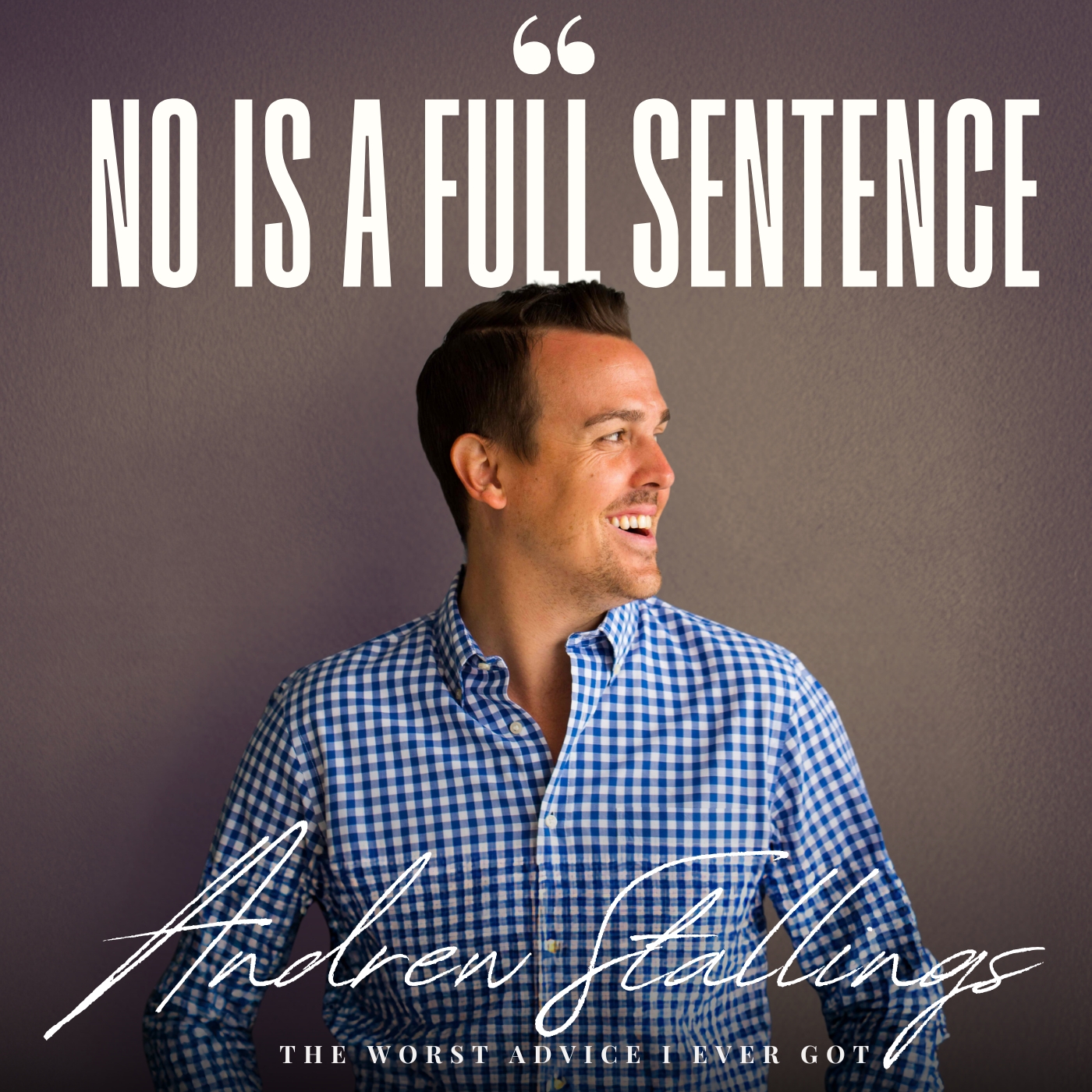
Today. Our guest is Andrew Stallings.
Andrew is the founder and CEO of Othello Group, a sports marketing and athlete representation firm that works with professional athletes, brands, and media companies to bring partnerships that extend far beyond the playing field. He works closely with athletes navigating the business side of their careers, while also partnering with brands looking to connect authentically with fans throughout sports and culture.
His career is a great example of what can happen when someone refuses to accept limits that other people try to define for them.
Andrew, welcome to the Worst Advice I Ever Got.
Hey, Andrew, I'm really excited to have you join us today.
[00:00:57] Speaker B: I appreciate you having me. And gentlemen, thanks so much for the time.
[00:01:01] Speaker A: Andrew, tell us about the worst advice you ever got.
[00:01:06] Speaker B: Well, I think this is hard because there's a lot of different pieces of advice that a lot of us can reflect on.
It was the worst.
The worst advice I ever got, though, was that no is a full sense, and there's a lot of different ways to interpret that and pull it apart. And I'm sure we'll kind of dive in deeper to it today. But over the course of my entire professional career in life, being constantly met with adversity, I think you hear those success stories that are often reflected in how people prevailed from just being constantly put down and told no, no, no, no, and how they got around it. But, you know, over and over again, in my, you know, career in life, I was told that just it's no. Is the fine line like, no is that, you know, final stop. And for me, you know, there's a lot of different ways to reinterpret how that sentence was completely written.
[00:02:02] Speaker A: Yeah, no is a full sentence.
I gotta tell you, that sounds tougher than a $2 steak to hear.
You know, what. What the hell, man? Like, who told you no is a full sentence. Think back to when you heard it first and kind of what the environment was like and how did it hit you?
[00:02:22] Speaker B: Yeah, so my. My first time that I was probably put into that position and I heard that comment was.
Was from a lot of different people in high school and specifically in academic settings. It was always in a guardrail and scenario of this is the box. Everything is black and white. And I think in traditional curriculum, that's how a lot of kids and how us were raised. In the same token, it's that two plus two is four. There's no discussion Otherwise. And that's how things were. When you're looking at colleges in your professional career, there's a path and there's a trajectory. No matter what path you go on, there is a right way and a wrong way to go about doing it. And for me, when I was looking at colleges, specifically my senior year in high school, you know, I. I had a 2.2 GPA, but I was senior vice president of my class. I was the captain of the basketball team. I had a lot of great accolades and things going for me, but it just. It was really hard for me to reflect on the fact that I was going to be measured under a microscope of specifically what this one common denominator was for me, which was at the time, my gpa. So I remember, you know, many of my advisors and guidance counselors, not all of them, but some of them at the time were just like, hey, this is, you know, you're not going to get anything in colleges. And like, hard stop, like, you. You should definitely start thinking about alternative, you know, methods of further education or career path, et cetera. And my parents included, I heard that a lot, you know, just growing up.
And I started applying to schools over and over and over again.
I think by the time I got my last rejection letter, which my 15th rejection let, it was from Marymount University in Arlington, Virginia. And I'll never forget going to the mailbox, getting that tiny little envelope, opening it up, and my dad kind of waiting for me at the door as I was walking inside, and I put it in the air, I was like, yeah, another one. And he's like, okay, so why don't we go to dinner tonight and let's talk about this. Let's begin formulating this alternative path, right? And for me, I just. I went right upstairs and this is, you know, before the Internet was extremely expansive, but, you know, still, like, dial up and things like that. I was like, nah, I'm going to, you know, go and write a handwritten note to the Dean of admissions. I'm going to plead my case. And let me. Let's have a conversation, some discussion about this, like, can we rethink how this works? And it was the first time in my mind where I started thinking, is there a way to not just persuade people, but to have a genuine and exchange in conversation to define a middle ground?
And. And that's ultimately what I ended up doing. It was my first real pitch, and I, you know, explained to, you know, the dean of admissions exactly who I was. I wish I still had that letter Today, but I reflect on it and I was conditionally accepted, graduated in four years.
You know, from there just continuously progressed. And it became a different theme and anthem at different touch points in my career, whether it was looking for an internship, whether it was getting a job, transitioning to another job, a new client. I mean, that mantra has always just been something that I face head on. And I think a lot of people face, which is, you know, this is the line. And it's like, I'm not here to be the aggressive outlaw that changes it or says no and tries to bust right through it. But I think it's a different way of thinking that I encourage so many people to explore and revisit day in and day out. Because not only just professionally speaking, but I think even just when you look at the society around us right now, more conversation is needed, right? More open mindedness, more discussion.
You know, for me, that's, that's kind of what's led me into a lot of success, you know, throughout my both professional and personal career.
[00:06:37] Speaker C: It's like that Michael Jordan, you know, like I've, I fail over and over and over again in my life and
[00:06:42] Speaker B: that's why I succeed.
[00:06:43] Speaker C: You know, it's like you need that adversity to be able to push yourself to find an answer. And, you know, it's tough and you got to do a thing.
[00:06:51] Speaker B: If everybody just says yes to you
[00:06:52] Speaker C: all the time, what you just become Lindsay Lohan, you know, you're just a monster.
[00:06:59] Speaker A: Well, there goes that guest possibility for the future. I guess this is transition, right? You're transitioning from high school to college. You overcame it.
No, as a full sentence was what you received 14 times and just bought into it in that 15th time. You fought back a little bit and it, and it made a little bit of a change. Talk about the move from college into your career.
[00:07:21] Speaker B: For me, when I was at Marymount, you know, and let me, let me preface, I am an adjunct professor at Marymount these days, so I'm certainly not badmouthing or berating Marymount and anything that was structured when I was there as a student. But you know, having that mandated internship as part of a graduation requirement, you put all this pressure on the students, like you have to have an internship. I probably applied to 75 plus different internship programs. I was begging, pleading, leveraging my network in any possible way. I would do anything just because I was so scared that I wasn't going to graduate if I didn't get an internship.
Luckily for me, persistence continuously paying off.
There was a handful of opportunities that I was just adamant and I was like, listen, if it's not now, it's going to happen at some point.
And one of those was SiriusXM radio. And the gentleman over there, his name was Ross Rosin who was part of the internship program at the time. I was peppering him with emails. I was just like, hey, keep me in mind, let me know if you ever need anything, someone to scrub the toilets, I'm your guy. And I'll never forget the deadlines coming up the night before. And I got an email at like 9 o' clock that night and it was from Ross Erosion, SiriusXM. He's like, Hey, I just had somebody drop out of our program. Like do you want to be the last person added into our internship? Before I could even finish the email I was just like resoundingly hell yes, yes, yeah, yeah, me like just jamming on the keys.
So you know, again I took full advantage of those opportunities.
But I look back on it and I, and I don't think I would have had that opportunity if I wasn't passionate, passionately, but also politely persistent. When I look back at that, that moment with Sirius XM in my internship, I very much put myself out there. Not as a source of desperation, at least front facing, but I made it known that I was available, I was amendable and I was at any point the person that they would need to fit into any jigsaw puzzle. I think on paper when we're applying for jobs, we're reading the job description, we're like, do I fit into this vertical in curriculum? Like do I fit as a T? And a lot of people when they're looking for jobs in this market, they're complaining about it day in and out like why didn't even apply for this? Because I'm not a senior vice president of marketing so I'm not even going to apply.
Only have five years experience, they want 10.
And I just, I, I tell people all the time like you, you don't know again, the world will tell you no. And it'll say like listen, like almost like stop. Like there is no discussion. And it's like listen, I'm not discussing, let's discover.
[00:10:04] Speaker A: Yeah.
[00:10:05] Speaker B: And I think that discovery phase is in a big way. You know what, what shapes a lot of people up for success long term.
[00:10:12] Speaker A: You know what I'm gleaning from your, from your story here is that the nose hardened you and it taught you about polite persistence and you're seeing some results from that. But I mean, self doubt has to creep in when you get that many nos. Like how did, how did you handle that? Especially as you went and started, you know, your own sports agency.
[00:10:34] Speaker B: I, I'd be lying to you if I said every day is it full of self doubt. And it's, it's a constant mental game. It's a, it's a constant battle and exercise. But I'll tell you this, the more, the more that you have, whether it's success or ammunition, if you will, you have more to lose. When you have nothing to lose and everything to gain. It's the most exhilarating exercise in the entire world. And I, and I think back to those moments where I was balancing five jobs part time.
There's no better exhilaration for me than when I'm just sitting here like, wow, like, you know, any win is a massive win because I just, I feel like I've, I have everything to gain and nothing to lose.
As my career has progressed and I've been, you know, extremely fortunate to take advantage of every opportunity presented to myself, the, the doubt creeps in more and more and more and it becomes a massive distraction. Just because people want you to fail, the world wants you to fail.
On the surface, your subconscious wants you to fail in every aspect of everything that you do.
That's entertainment. As much as I hate to say it, when you look at modern day media, we're drawn to people's failures on reality television and sports. We don't get excited on the 71st home run, the MLB anymore. We get more excited for the person that struck out four times.
[00:12:08] Speaker A: The not top 10 list is very popular.
[00:12:10] Speaker B: Exactly, exactly. So when you, when you kind of go through your career and go through life in general, the one thing I just continue to remind myself is those, those shortcomings, those failures, they're inevitable, but they also define you. It can be a really exhilarating exercise to be reminded that life comes at you fast. Failure is inevitable. But are you going to just bask and wallow and the woe is me, or are you going to prevail?
[00:12:41] Speaker C: I mean, no is kind of like a default response. I think a lot of times with people, especially in any kind of sales environment at all, even if you're just selling a lifestyle or selling, you know, something that could legitimately help somebody, you're still, you're just, you're finding a natural instinct is to be like, no, I'm not interested in that. So if you let that kind of guide you, you know that you're Never going to ever sell anything to anyone.
Are you feeling like that's something that you're seeing now more than 10, 12 years ago?
[00:13:10] Speaker B: People are just lazy, to be honest with you. Like, I think no is. No is a lazy response. I can respect the way the job market is. I can respect, you know, how people transition from different jobs, they get laid off, etc. But what I can respect is the opportunity that's before a lot of people and how they fail to act on it.
And all too often we don't realize until it's too late that we're going to hear no, we're going to hear rejection. But those that typically we envy, you know, and look at as like, oh, they're so lucky, they're so fortunate or you know, whatever, we reflect on it and we blame them. But the reality of it is is that they are just taking advantage and seizing those opportunities. That's what I've done my whole life is not, I wouldn't say challenge authority, but you have to question certain things. So you have to be, you have to know when to stop, you have to know when to transition. But you know, sometimes people just say no to say no. And it's like, why? Like I get you're busy, but why, why no? And again, why is a really annoying, you know, response too. Right.
You, you owe it to yourself and you owe it, you know, to everybody else to explore it.
[00:14:23] Speaker A: The thing that keeps coming to my mind is you had to handle no so many times in your career that you had to maybe find a way to systematize that a little bit. Like what's your system for handling no.
[00:14:36] Speaker B: Yeah. I think it really comes down to, to three questions that I will continuously ask myself.
The first one, does it solve an immediate problem when you're having any exchanges or you're kind of evaluating this? If the answer is an immediate no, I think it's pretty easy to kind of gauge and understand what your plan of course of action is. If it's something that does solve against it, well then very quickly you will probably start to spiral and compartmentalize in terms of what is the alternative approach to this, the next one, does it overly deliver on value? You know, if I have a client that has massive potential, very top of their craft, and they're an authentic fan of a brand, for example, and we have multiple touch points or opportunities to be able to give them opportunities for sales, distribution, anything of that nature, you know, that can far exceed a one dimensional type of business or partnership. Just in my line of work.
And then the last part is, does it have growth potential?
You know, a lot of people will sign on the dotted line based on current market value, but how are you systematically communicating and figuring out, okay, how do we go from here to here over time? And not only that, but say if you do a relationship that's driven off of a timeline of a certain amount of months or a certain amount of years, you want to be able to communicate and show them that merely those renewal touch points and ending of those agreements are opportunities to recalibrate and re evaluate how we get to that next summit. So, you know, again, three things I usually ask is, does it solve the immediate problem, does it overly deliver on value and does it have growth potential?
[00:16:25] Speaker A: Why focus on delivering on value?
[00:16:27] Speaker B: I mean, I think if you're only chasing like validation, then the rejection side of it crushes you.
But if you're beginning, but if you're giving more than you're getting, you know, again, it's the typical Gary Vaynerchuk model, like, you know, jab, jab, jab, punch. Right.
But if you are consistently giving more than you're getting, it's like, no is just a step on the ladder. Right. I mean, it's merely a step in the path across the board.
[00:16:53] Speaker A: You know, I think a lot of our listening audience here's know a lot. That's probably why they listen to our podcast, right?
[00:16:59] Speaker C: Yes.
[00:16:59] Speaker A: Like, what's your advice to people in general that just face this waterfall of no's like you've had to deal with in your life?
[00:17:07] Speaker B: I'd say respect it, embrace it, but don't let it define you. And it's no is, I wouldn't even say rarely forever. It's not forever. No is, is systematically temporary.
And for you, it should be about your timing, your delivery, and that persistence that we talked about throughout the course of this episode.
So for anybody who's sitting there just saying, oh, no is rejection. That's it. Well, what's the alternative? What's the evolution? We're currently living in a great renaissance, whether a lot of people want to embrace that or not.
Your life, profession, anything you do is full of immense opportunity. How you so choose to be able to go and grasp that opportunity and how you let it define you is completely your choice and it's up to you.
[00:18:02] Speaker A: Well, I'm certainly glad you didn't let no define you with all those letters and all those rejections and things that you faced over the years, because it clearly led to your business. It led to your Success, and it led to you being a guest on this podcast, which is going to benefit our listening audience. So, Andrew, thank you once again for not letting no be a full sentence and for all your success and sharing it with our. With our listeners today. I really appreciate you.
[00:18:29] Speaker B: I definitely appreciate the time, guys. Thank you.
[00:18:32] Speaker C: Yeah, I should have said, no, you can't be on the podcast.
[00:18:34] Speaker B: It's a c.
[00:18:37] Speaker C: No, you can't. Come on, jb.
[00:18:40] Speaker A: I keep coming back to this word persistence with Andrew's story, but. But not for the sake of being stubborn. You know what I mean?
[00:18:47] Speaker B: Yeah, right.
[00:18:48] Speaker C: It's not just ignoring the word no like you didn't hear it or something. It's about figuring out when that no actually means try harder.
[00:18:57] Speaker A: Yeah, yeah, yeah. That. That's. That. And that's really what our show is about. Right. A lot of our guests don't discover the advice is bad when they hear it. They discover it when they finally push back.
[00:19:08] Speaker B: Yeah, right.
[00:19:09] Speaker C: No is a full sentence is similar to a lot of the stuff we hear on the show. You know, basically take the advice that you're given. You know, it's like a full sentence. But, I mean, if everybody did that, we wouldn't be sitting here in the third year of the podcast talking about stories like Andrews.
[00:19:23] Speaker A: Right. That's the thing. That's the thing. Sometimes pushing back respectfully is the difference between a closed door and a new opportunity. And that's. Andrew showed that to our audience from the very, very beginning of his story today.
[00:19:35] Speaker B: Yeah.
[00:19:36] Speaker C: And again, you know, it's not about being confrontational. It's about being persistent in a smart way. You know, he kept asking the questions, he kept showing up, and eventually somebody gave him a chance.
[00:19:46] Speaker B: Yeah.
[00:19:46] Speaker A: Yeah. Great reminder that sometimes the only difference between us, you know, a story that's a success and a rejection story is the person who decided not to stop at the first. No.
[00:19:57] Speaker B: Yeah, very true.
[00:19:59] Speaker A: Well, Andrew, thank you for sharing your story and for reminding us that persistence often starts with the courage to push back just a little bit.
And to everyone listening, thanks for joining us. We'll see you next time for another episode of the Worst Advice I Ever Got.